
|
By Alison Goldberger When I wanted to learn how to make salami I knew travelling to Italy was the only way to do it, so I booked onto the Advanced Salumi Course in Tuscany with Sapori & Saperi Adventures. The course was incredible, and I learned so much. 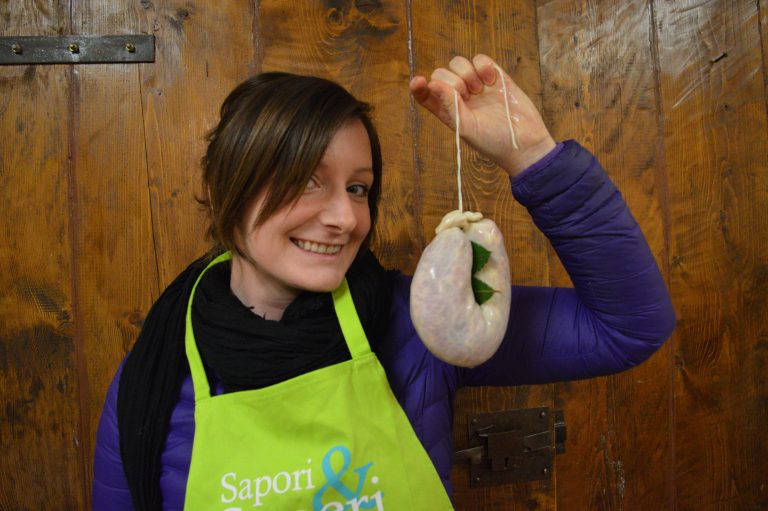 Me and my mondiola, a salami unique to the Garfagnana (photo: Roman Goldberger) I was also so impressed by Erica and her company that I asked her if we could collaborate. I’m a Scottish journalist and organic pig farmer but have lived and worked in Austria since 2015. Now I assist Erica with social media and online marketing. I absolutely love telling people about my time on her course and now I am excited to share with you why I think travelling with a local expert in 2022 (and beyond) can only enhance your holiday experience! Eat in incredible restaurants...and in private homes 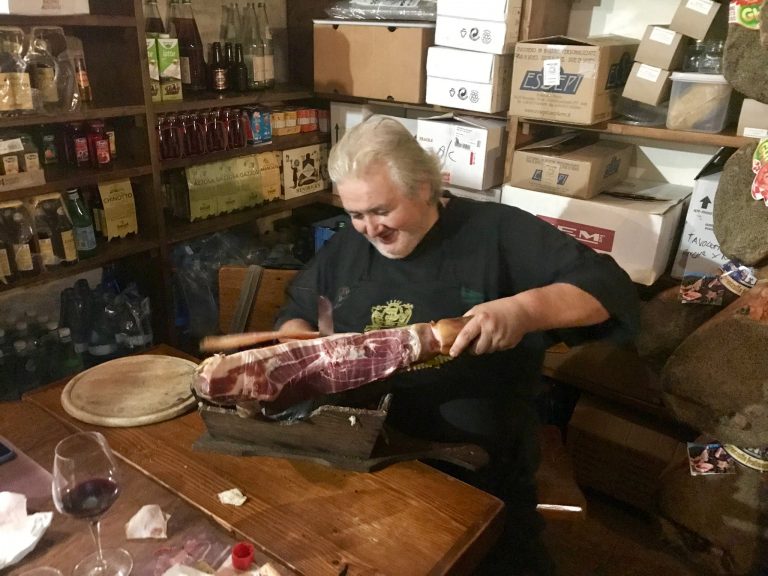 Andrea sliced prosciutto by hand as we sat around a long wooden table in his cellar-warehouse-restaurant (photo: Alison Goldberger) One of the most wonderful experiences I had was to dine in restaurants uncovered by Erica after years of eating and living in Tuscany. You can be guaranteed you’re not just eating in the restaurant all the other tourists found online! We were treated to dinner at Il Vecchio Mulino, where Andrea brought out course after course of exquisite local food. Many of Erica’s courses and tours also include meals in private homes. In Capezzano I was welcomed into Gabriella’s home where I ate the best seafood I’ve ever had. The freshest seafood cooked to perfection and an extremely warm welcome – it was an unforgettable experience. Learn how to make prosciutto as the artisans do 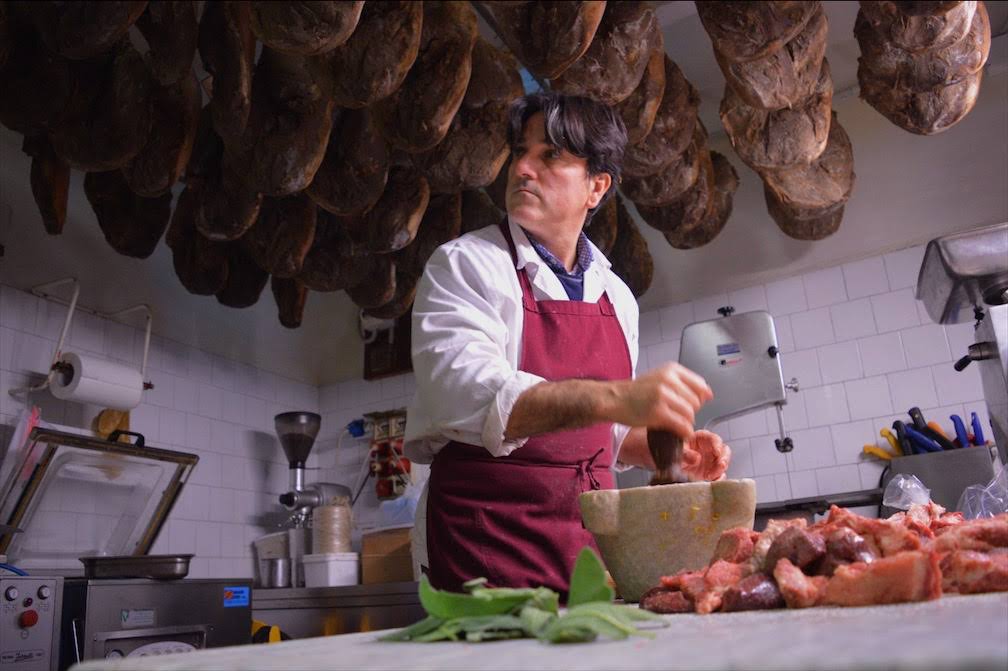 Simone crushes garlic to season his prosciutto (photo: Alison Goldberger) Do you have a passion for prosciutto like I do? It’s unlikely you can just stroll up to any producer and they’ll tell you how it’s done. But when you travel with a local you certainly can, and they are happy to answer all your questions. When learning all about salumi in Tuscany I visited numerous artisans and gleaned the knowledge they’ve garnered over a lifetime. On these tours you’re also supporting these very small businesses, creating wonderful slow food with a passion you’re unlikely to find in large-scale producers. What’s more, you get to taste their incredible products! Savour products from small-scale producers 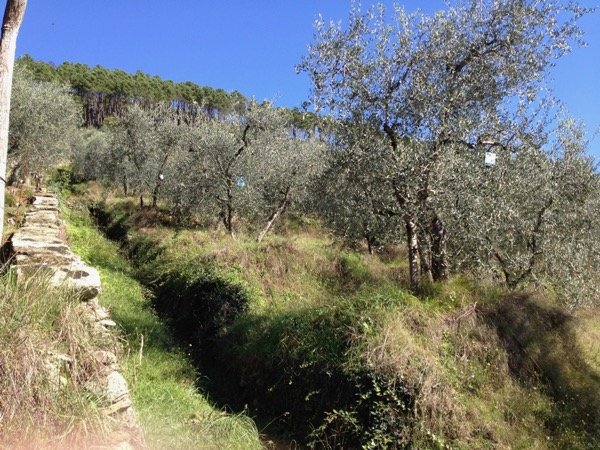 Wintery olive grove You want to visit a local organic olive oil producer, or have always wondered how chestnut flour is produced, or perhaps gelato is more your thing? These were all requests during my course and every one was fulfilled! I took home a bag of chestnut flour after seeing how chestnuts are dried and milled. I sampled the best pistachio gelato at Cremeria Opera in Lucca and bought the tastiest new-season olive oil from Claudio Orsi of Alle Camelie. Erica has built up so many contacts across the region and she is happy to help visitors find what they’re looking for.
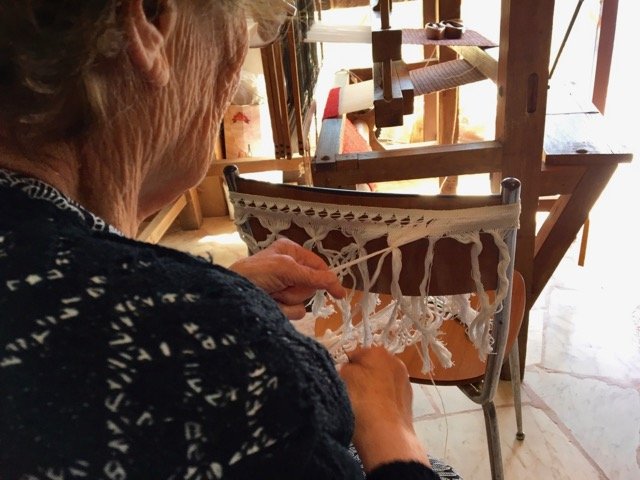 Ermanna, now in her 90s, shows us how to tie a complicated fringe (her handloom in the background). Erica drove us during our course so she was always on hand to answer questions and give us explanations about what we were seeing as we travelled. It was information born from a passion for Tuscany and gave us a wonderful insight into the history of the region as well as what it’s really like to live there. This is a feature of all tours and courses from Sapori & Saperi. For instance, on the Tastes & Textiles tours participants learn all about Lucca’s rich tradition of producing textiles. Meeting local craftspeople provides a wealth of knowledge you couldn’t get elsewhere! Did someone mention gelato 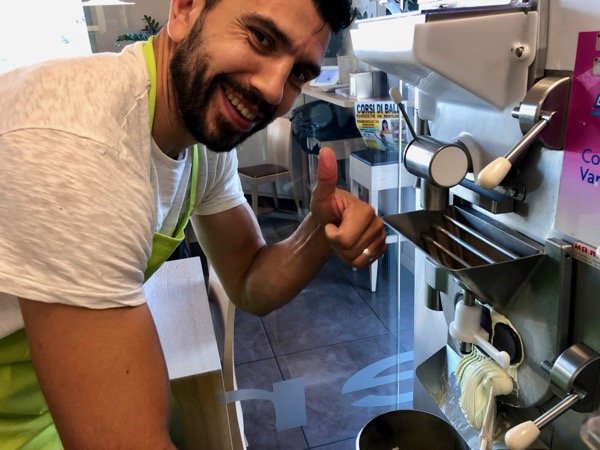 Gelato can’t fail to make you smile! I know one of my first thoughts when I think of Italy is gelato. We were taken for a quick pit-stop to sample some delicious gelato. It was actually in the Cremeria used for the Art & Science of Gelato course run by Sapori & Saperi. During that course participants immerse themselves in the icy world of Mirko Tognetti of Cremeria Opera Naturali per Gusto, Lucca. They learn his secrets and the science behind gelato and how to create their own flavours. Sounds like an absolute dream to me!
If you landed here by chance and would like to be notified of future posts, you can sign up here. If you’d like periodic news about our tours and courses, sign up here. This blog was originally published on Slow Travel Tours on 20 January, 2019.
0 Comments
By Alison Goldberger 2020 is definitely a year none of us will ever forget, that's for sure. It all started off so promisingly with lots of excitement about meeting all of you who had booked on a tour or course! Of course we all know how it ended—with a year very difficult for a small tourism business. Although we were disappointed we had to cancel many tours and didn't get to meet you, we were buoyed by all your messages, interaction on our social accounts and hope you enjoyed the virtual tours we ran. And of course, it wasn't ALL bad, and Erica and I have survived the year in good health! So we'll start our review at the beginning, before we had even heard of the virus that would characterise the year... January 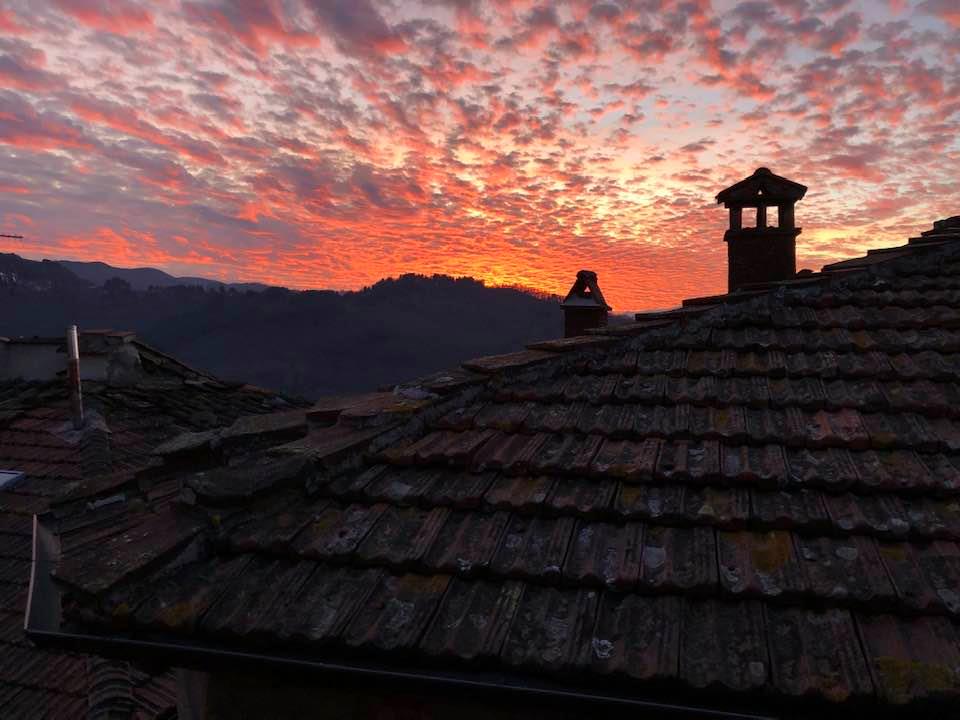 The view from Erica's window One of our first posts on Facebook was this stunning photo taken from Erica's window. She captioned it: 'The view from my window. Must be a good omen for 2020!' It makes me laugh a little now looking back at this. 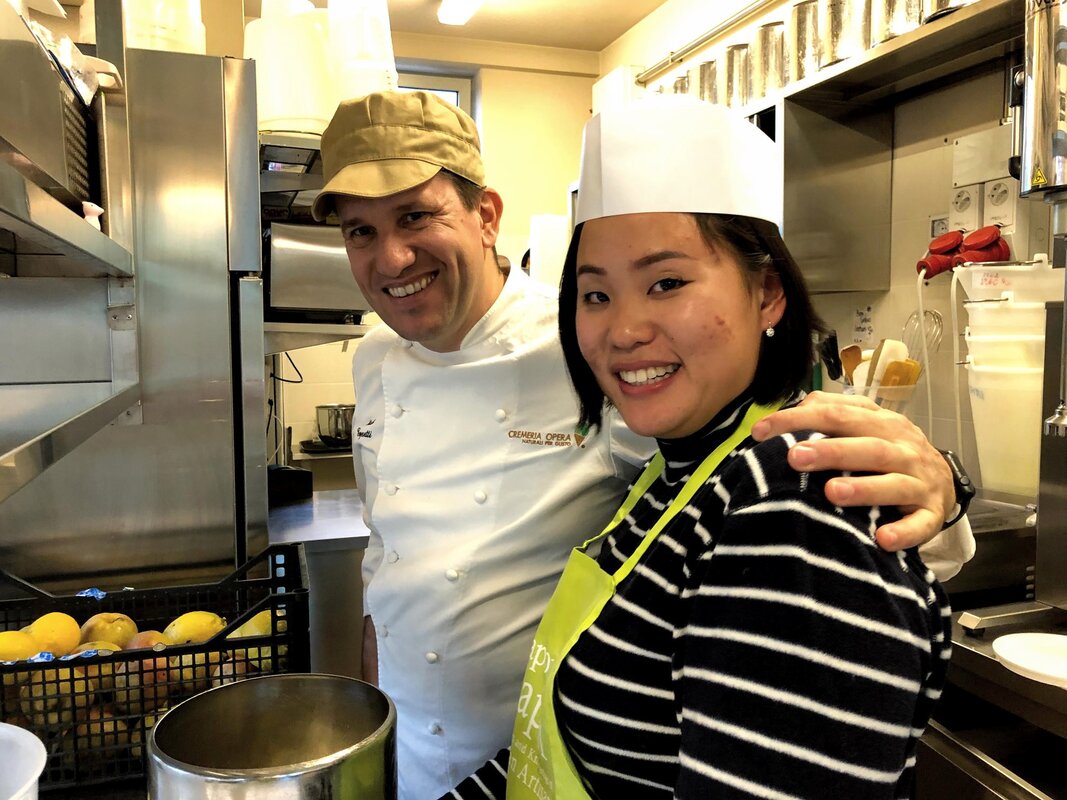 Mirko and Sorravee 'Gin' Pratanavanich during the first course of the year As I said in the introduction, 2020 started off great! The Art & Science of Gelato course got into full swing and we welcomed the super talented Sorravee 'Gin' Pratanavanich. Gin had grand plans, after learning with us she was due to head off to take up a chef internship at a hotel in Abu Dhabi. Looking ahead, Gin would like to open a pastry shop and gelateria in Bangkok. 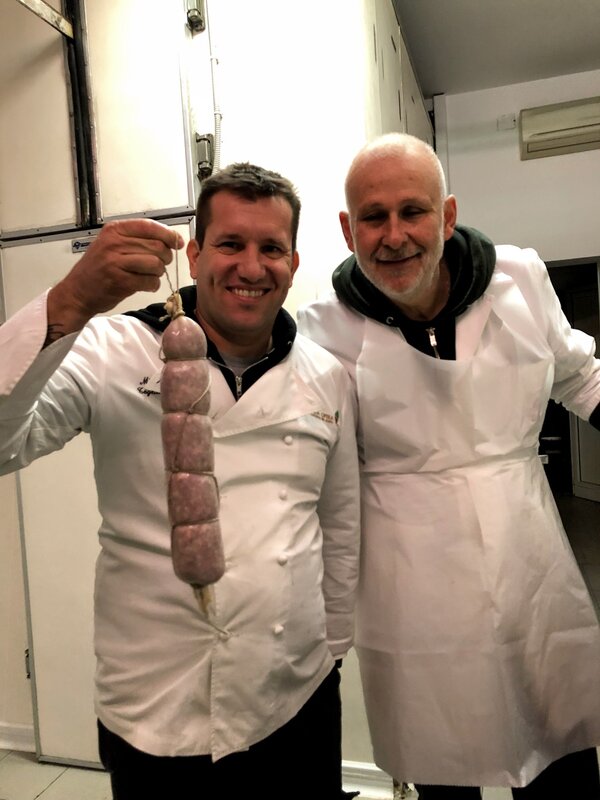 When gelato met salumi... Mirko and Massimo! We were also delighted to be able to run the Advanced Salumi Course Tuscany in January. Two of our artisans met during this course, Mirko who leads the Art & Science of Gelato course learned how to make salami from artisan norcino Massimo Bacci. 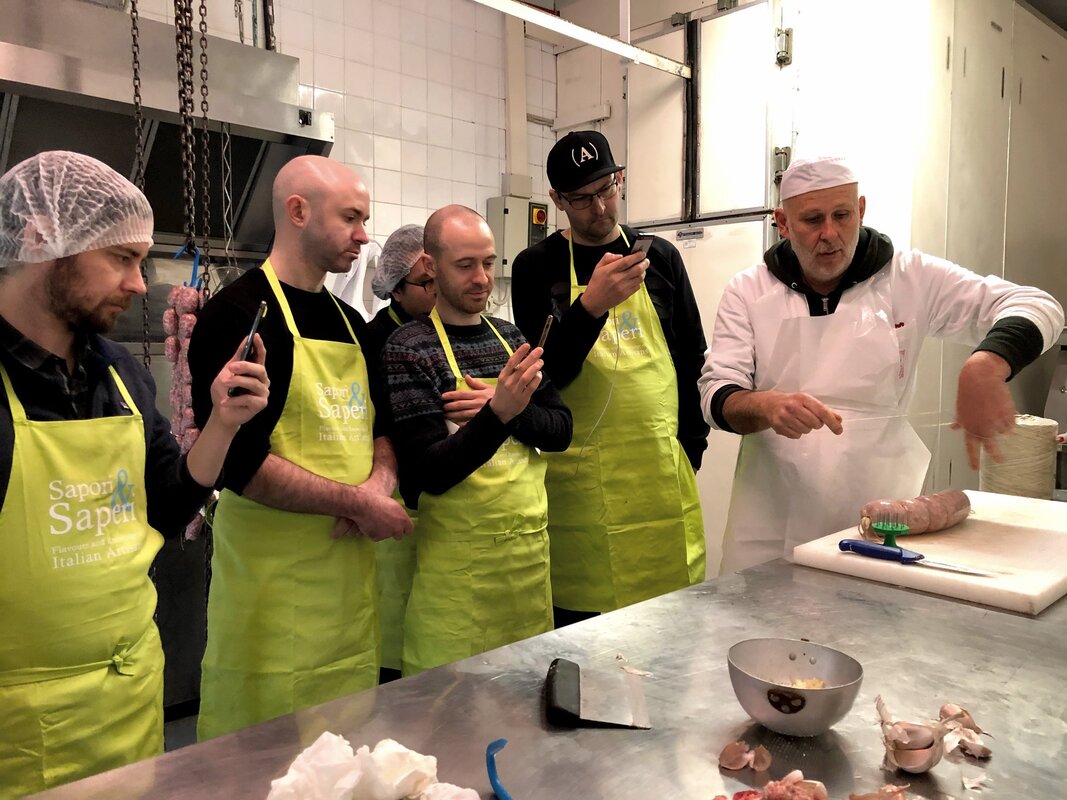 Recording every piece of information shared by Massimo Bacci Mirko wasn't the only one learning however. We met lots of interesting participants during the January Advanced Salumi Course Tuscany. Here we see them learning all about knots. Knots are important to hold things in place and to squeeze air out. To produce a nice looking product, you need to tie tidy knots. And as you can see, our participants were taking this very seriously! On the blog in January we also shared a beautiful piece by Lin Hobley about her experiences of the Tastes & Textiles: Woad and Wool tour. Read it here. February 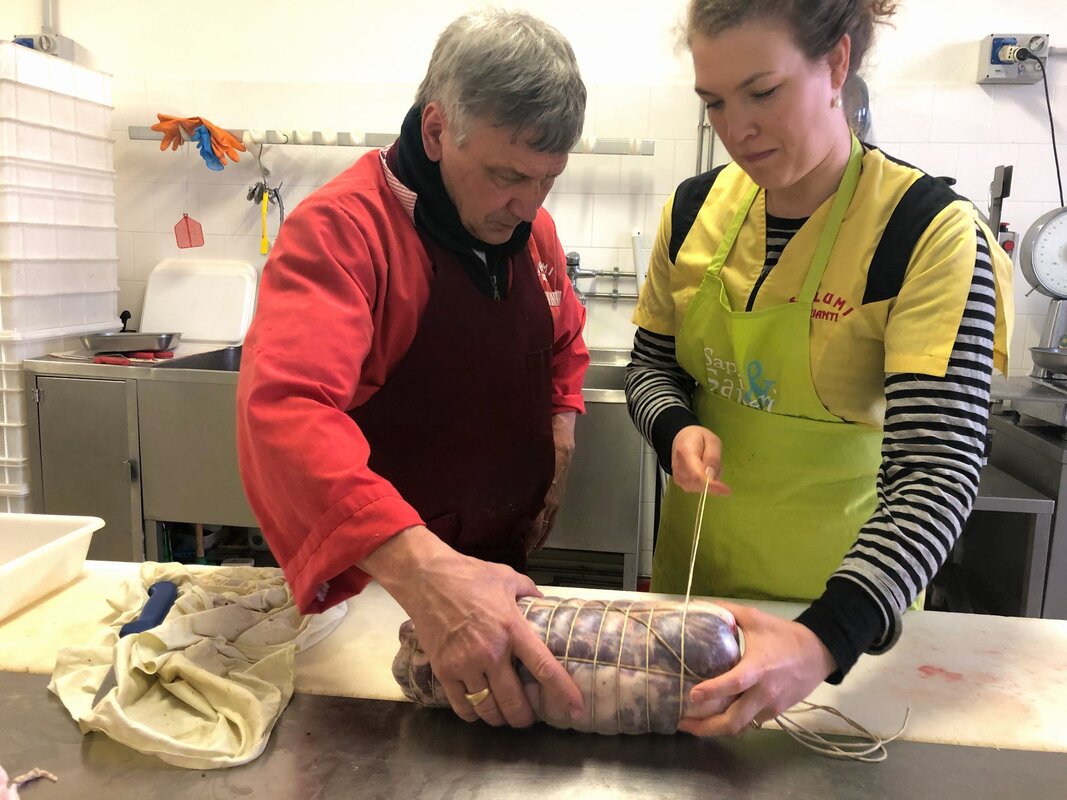 Tying coppa from Aldo Brianti's Nero di Parma pigs February saw us on the Advanced Salumi Course Bologna-Parma. We left Tuscany for Emilia (the northwestern part of Emilia-Romagna). This region of Italy is particularly famous for not one, but two delicious types of salumi— Prosciutto di Parma and Mortadella di Bologna! Check out the blog post here for more pictures and information about what happened during this tour in February! March 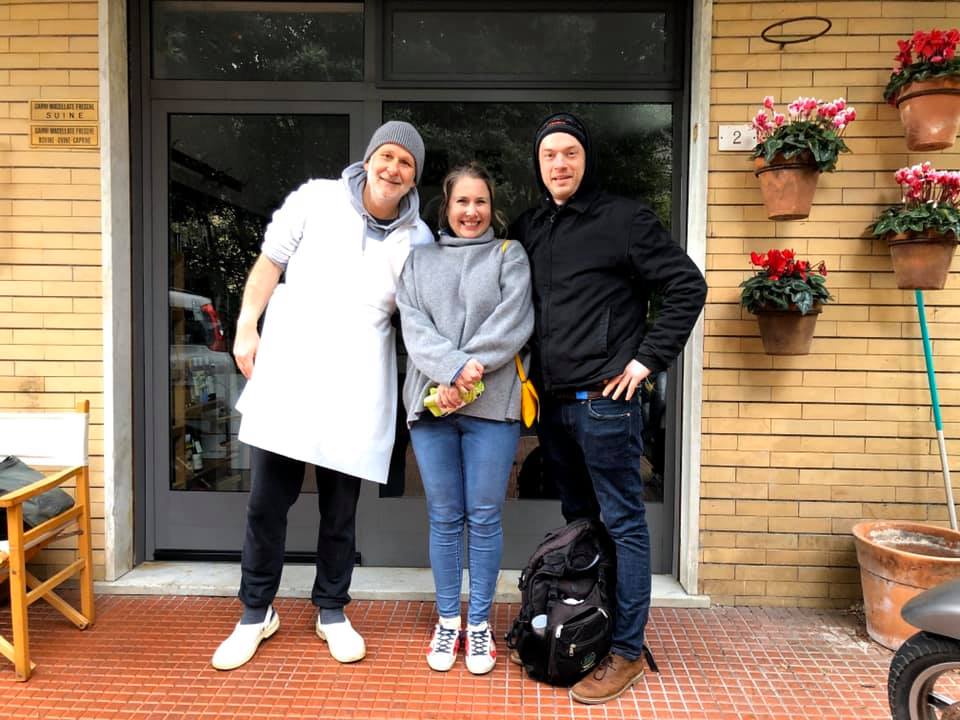 Katie and Seamus with Massimo Bacci March of course brought with it COVID-19, and in Italy things became serious very quickly! It was still an unknown entity in March, and we weren't sure how things would play out. We welcomed a couple of intrepid souls onto the Advanced Salumi Course Tuscany in March, in what would be the last course for a while! We were still hoping that things would all blow over but were concerned about the impact the travel bans would have on those looking to come on courses and tours in the near future. Anyway, Australian vodka producer Katie Krauss and American head chef Seamus Platt joined us. They managed to learn everything the course had to offer before dashing off on the last flights home!  The case of the quarantined car! Erica quickly had to get used to life under lockdown, long before many other countries started to introduce such measures. It did, however, result in her having a bit of an adventure! As flights started to get cancelled across Europe, one unexpected result was the car of some friends trapped in the Pisa airport car park, which was due to close. After calling in various favours the car was freed...read exactly how in the blog post here or click the car image above! 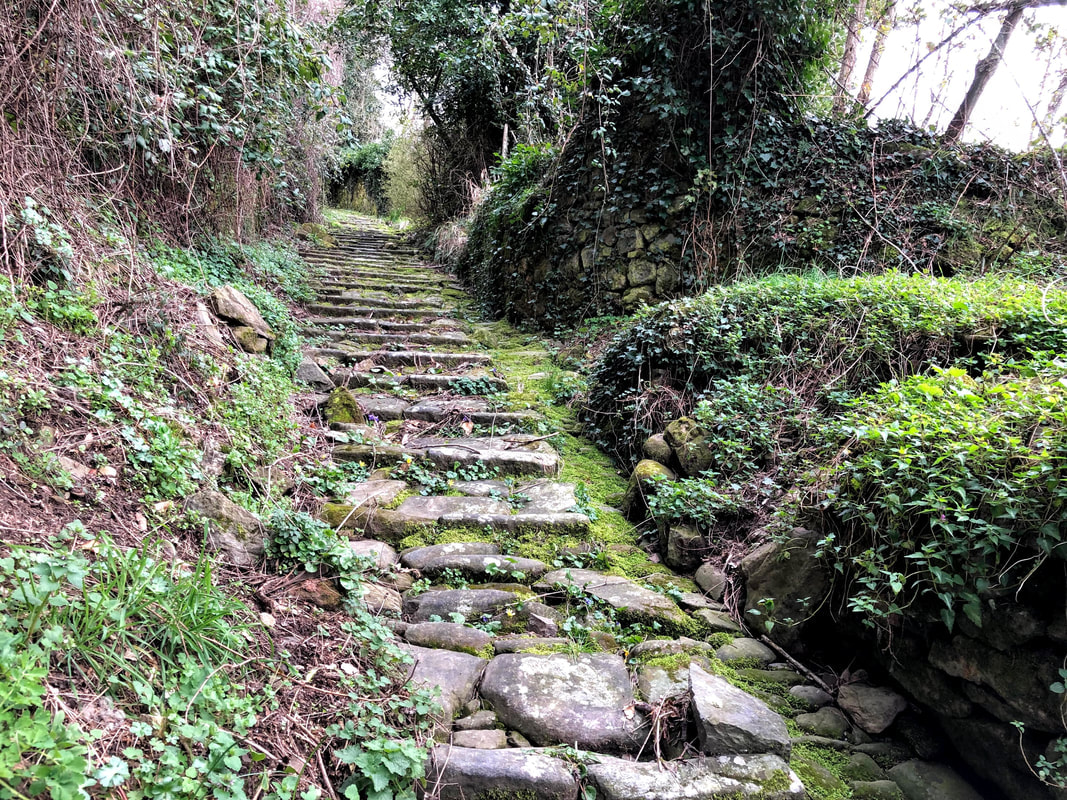 Along the mulattiera It also allowed for a bit of cooking and exploring the beautiful surroundings outside her door. More information and pictures are here in the March round up blog post. 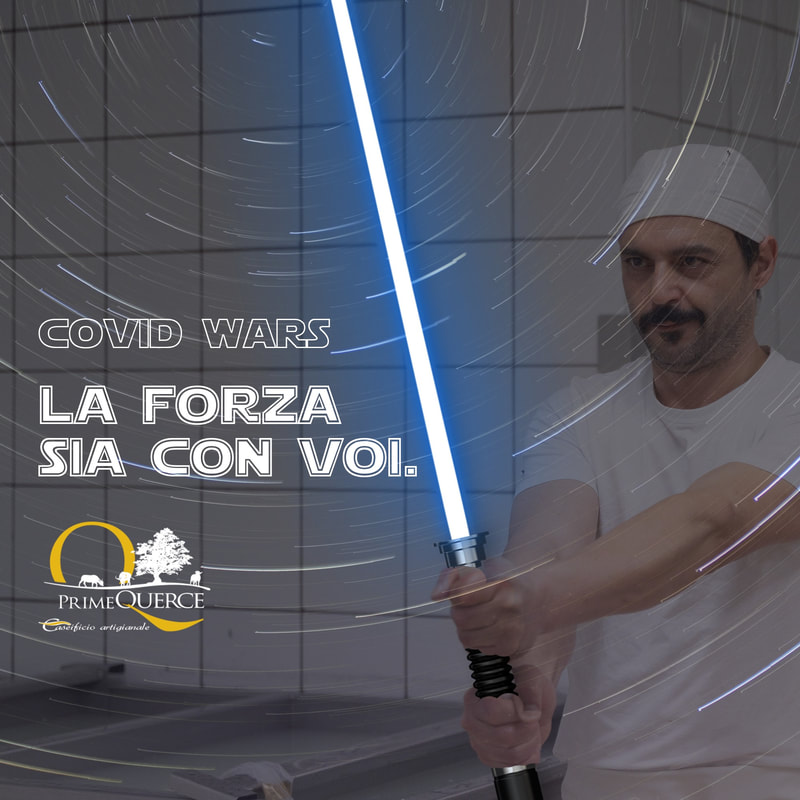 Across Italy people started to pull together in the face of tough lockdowns, travel bans and an unknown virus. Many sang and played music from balconies and out of windows. Antonio Daniele, head cheesemaker at Caseificio Prime Querce, and one of the artisans who teaches our Mozzarella & its Cousins course made this graphic and said: 'We must withstand and fight. We'll come out of this stronger than before.' April 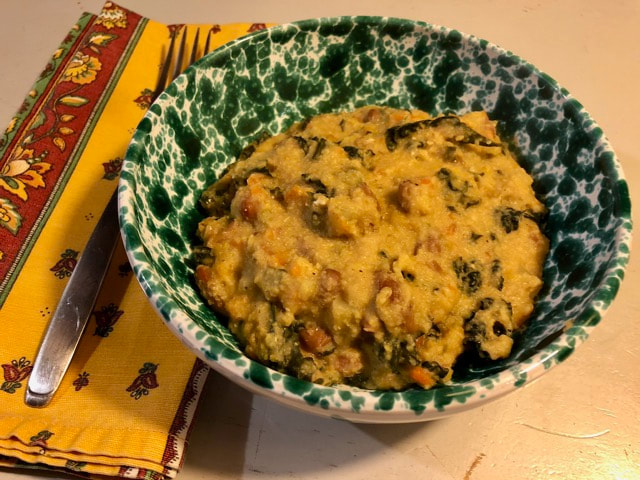 The finished infarinata In April we started to adjust to the new normal. For Erica, even cooking dinner turned into an epic adventure! This meal took her on a journey to remember people she'd met along the way and about the history of the ingredients. It really is a fantastic story, you can read the whole thing here - or by clicking the image above. 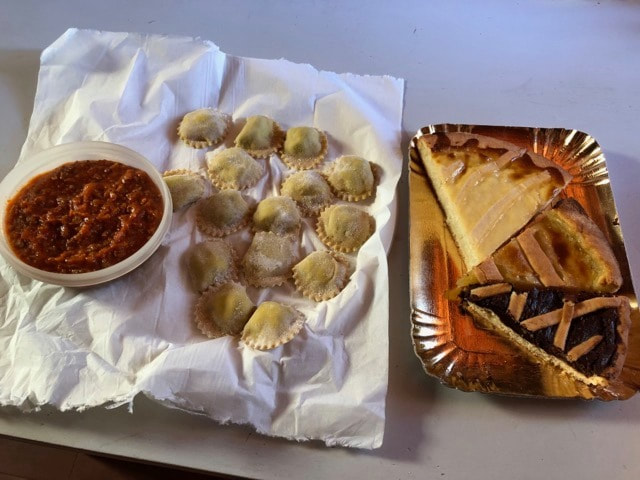 A feast delivered by the neighbours Lockdown meant Easter alone for Erica, but her neighbours certainly wouldn't see her starve! She wrote in a Facebook post: "Under lockdown they couldn't invite me to eat with them. At 11.30 am the doorbell rang. It was Eugenia with three slices of pie with different fillings—rice, lemon and chocolate. At 12.30 the doorbell rang again. It was Daniela bringing her homemade tortelli and sugo. I was only planning marinated and grilled goat chops with cannellini beans and insalata with local red wine. Now I had a three-course lunch. Such kindness and generosity, and I certainly didn't feel alone." 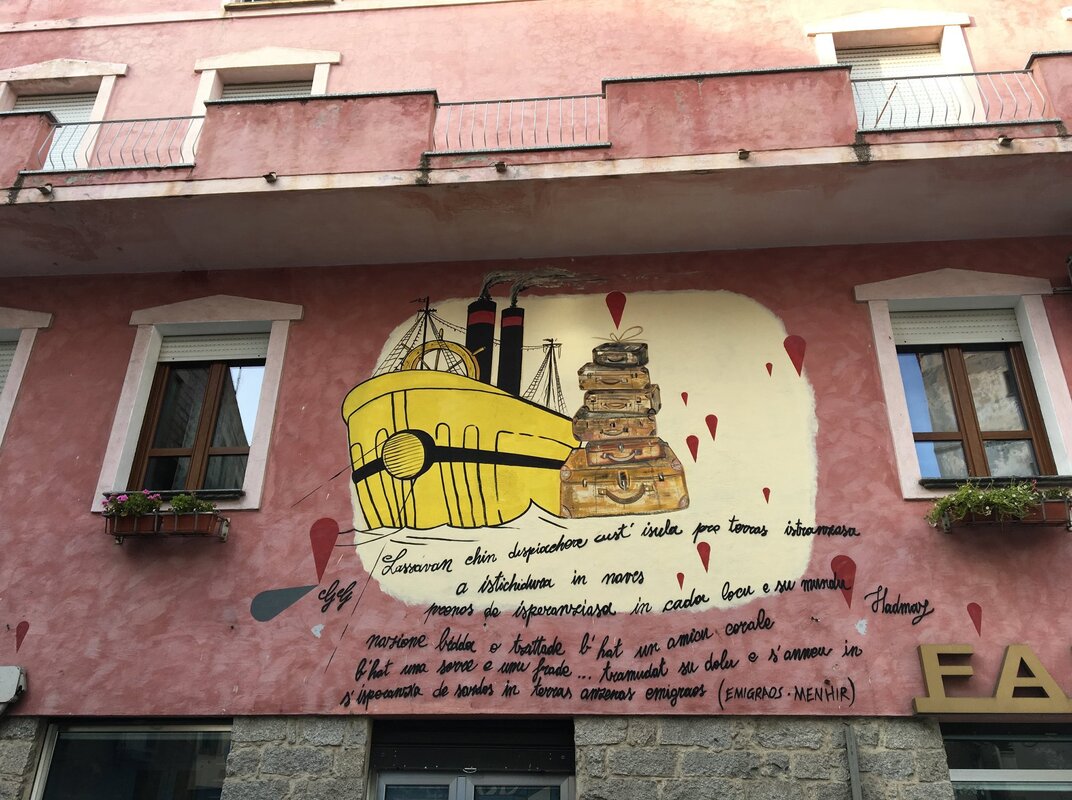 The houses in the town of Orgosolo are decorated with protest murals In April we also ran one of our first 'virtual tours' to give you all a taste of what you would have been experiencing, had you been allowed to visit Italy. We all travelled around Sardinia on the Celebrating Sardinia tour and had a great time! You can read the whole thing for yourself in the blog post here, or by clicking the image above. May 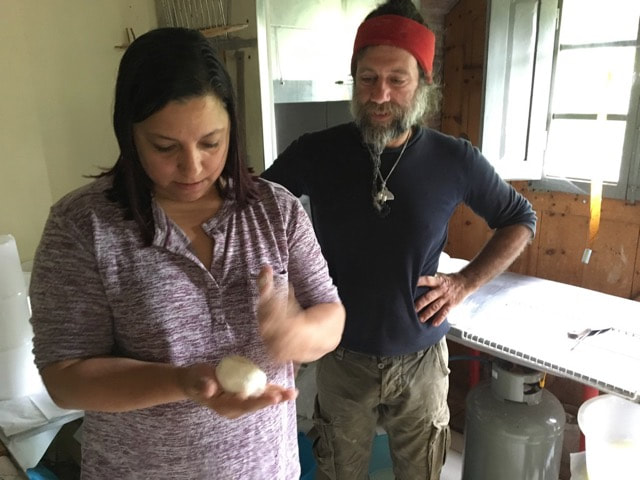 Enea casting a watchful eye... In May we would have been running the Theory & Practice of Italian Cheese course, but that was not to be of course. So we also offered a little preview on Facebook. We visited Enea Giunti's goat farm and learned how to make fresh goat cheese. We stayed at Agriturismo La Torre at Fornoli and met Vitalina who shared her extensive knowledge of cheese making. We milked cows at Marzia Ridolfi's and drove up to Daniela Pagliai's to see her small modern dairy and how she makes a number of different cheeses from one pot of milk. And all this in the company of Maria Sarnataro, a real expert on cheese! Read all about what else we saw in the blog post here. 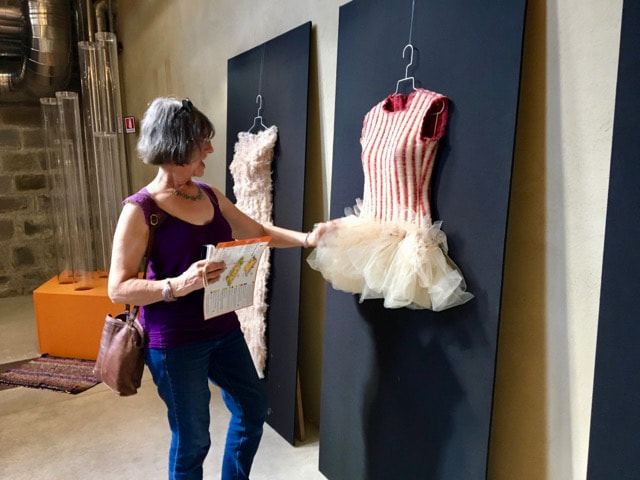 The Tastes & Textiles: Woad and Wool tour was also meant to run in May, but instead we ran it as a virtual tour. It was a fascinating tour with so many interesting sights and photos, which you can see here in the blog post. June 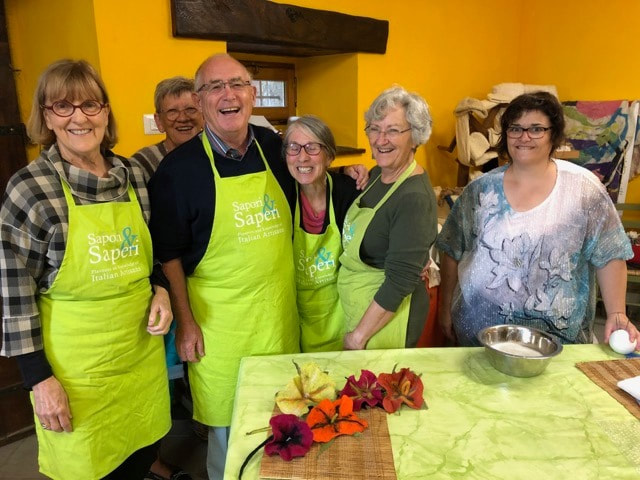 All smiles on tour Another month and another virtual tour, this time it was the Tastes & Textiles: Hanging by a Thread tour. Card weaving, farm accommodation, vineyards, Garfagnana potato bread, knitting, felting, weaving, wonderful food, an ethnographic museum, a woolen mill - it was all there and more. Read all about it in the blog post here. 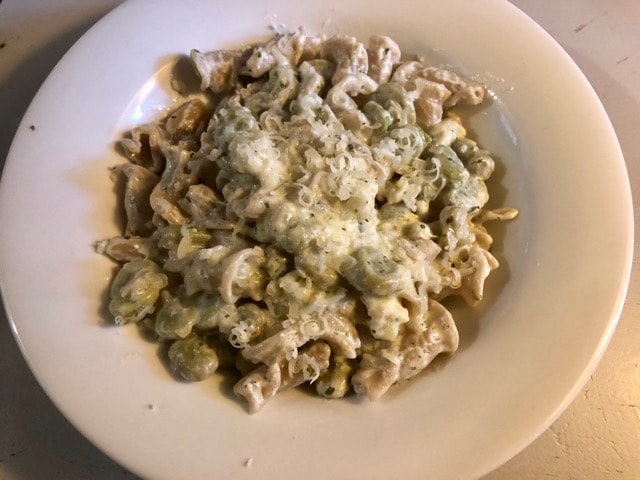 Pasta made with fava beans After the tour Erica shared some of the delicious meals she'd been making. She had been experimenting with ricotta. The people who sell it in the open-air market won't sell a small amount. She has to buy a whole one. This spring she tried this simple sauce for short pasta made with fava beans (broad beans) and ricotta - delicious! 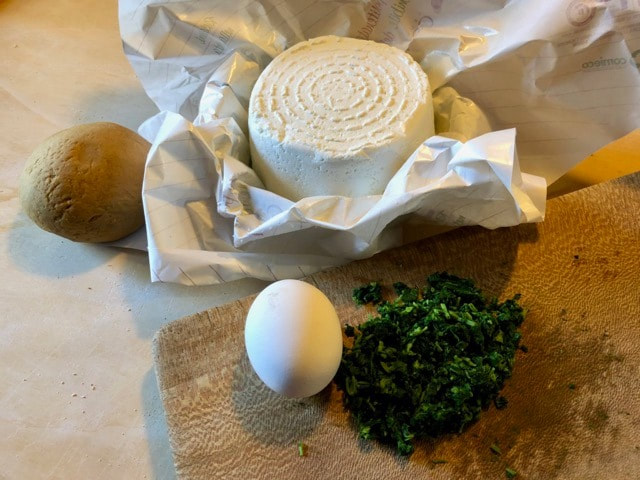 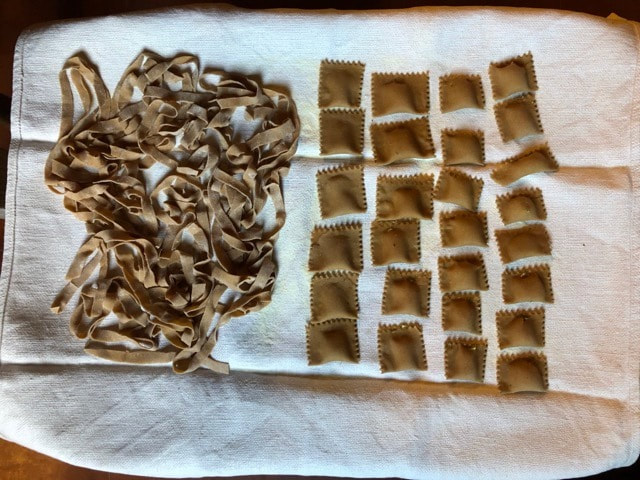 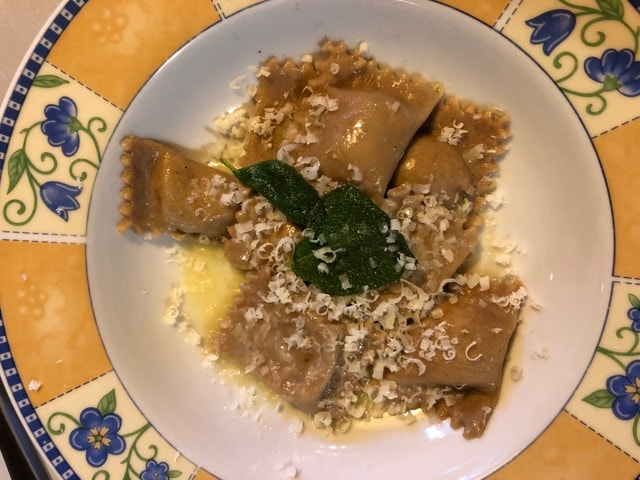 The classic dish everyone around Erica makes with ricotta is ravioli. She said of this meal: 'I have a lot of chestnut flour in my freezer—gifts from friends who collect, dry and mill their own. I made pasta di castagna (about 1/3 chestnut flour) with a filling of fresh ricotta, young nettle tops, an egg, salt, pepper, nutmeg. The slightly bitter nettles contrast well with the sweet chestnut flour. The sauce is simple melted butter with fresh sage leaves.' 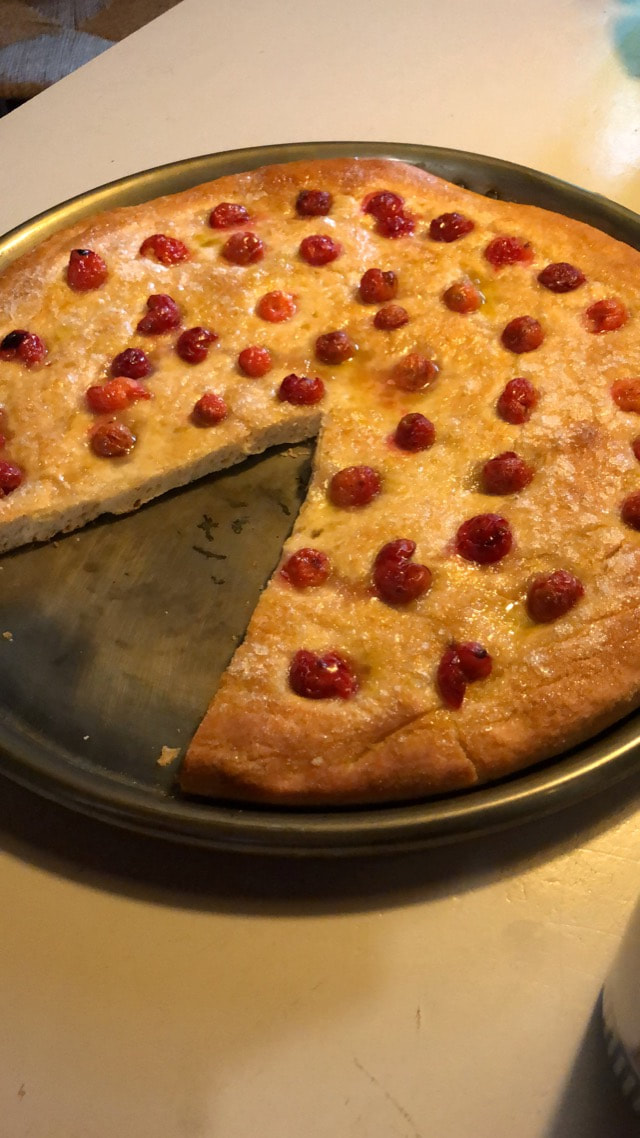 Cherry focaccia This recipe in particular got my mouth watering! There is a self-seeded cherry tree hanging over Erica's orto (veg garden). In June it produces a small crop of mildly sour cherries. Every year she makes one focaccia with the cherries, but it never turns out exactly the way she wants it. Until this year. It's exactly the thickness and degree of sweetness she'd been searching for. Persistence pays off! July and August 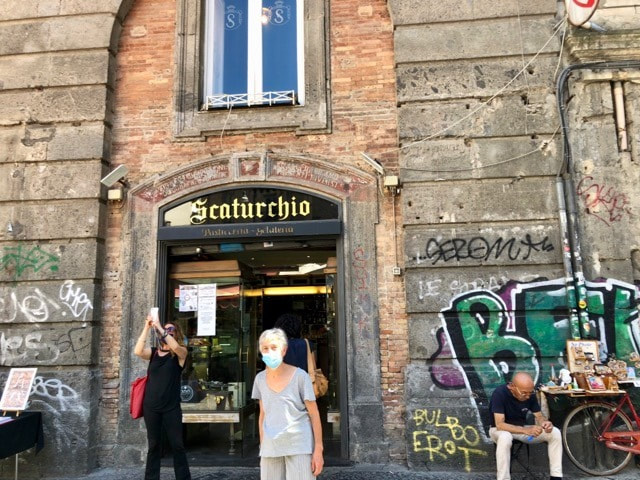 Erica outside one of Napoli's most famous pastry shops With some restrictions lessening in Italy, Erica took the chance to do some travelling! At the end of July she headed off to Pompei. She first saw the sights of Napoli and was welcomed by her collaborator on the cheese courses, Maria Sarnataro. First they tried some tasty delicacies, including the famous sfogliata. 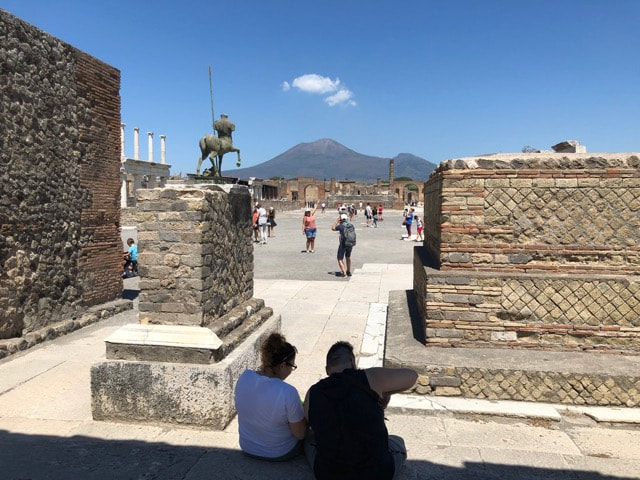 While in Pompei Erica hired a wonderful private guide, Francesco Tufano, an archaeologist who could answer all of her questions and more! Read all about the trip here in the blog post. 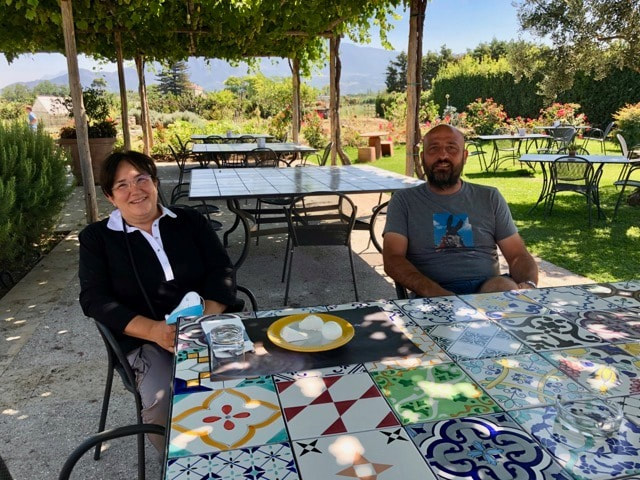 Maria with Enzo Barlotti The second half of Erica's trip took her from Pompei to Salerno where she and Maria visited some mozzarella dairies. She was very impressed when she visited Caseificio Barlotti and met brothers Enzo (pictured) and Gaetano Barlotti. She hopes to bring future participants on the Mozzarella & its Cousins course for a tasting in their beautiful garden. She had some samples of his bocconcini, ricotta and a new brie-style cheese, all made with the milk of their own buffalo herd. The mozzarella and ricotta are among the best she'd tasted. Read all about this part of the trip in the blog post here. 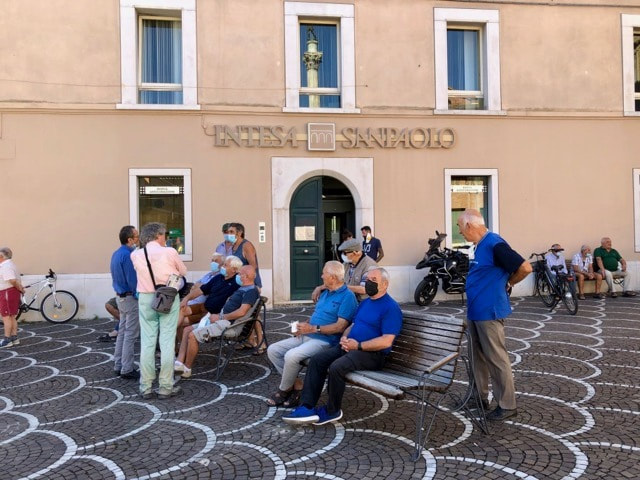 Erica also took a research trip to Le Marche for the Tastes & Textiles: Woad & Wool tour. It's during these types of trips she meets the artisan's we visit on tours and finds the incredible restaurants we dine in! Perhaps you don't know where Le Marche is. Le Marche means 'The Marches', which in English refers to an area of land on the border between two countries or territories (eg, the Welsh Marches). In fact, Le Marche borders three other regions, Emilia Romagna, Tuscany and Umbria, with the Adriatic Sea to the northeast. Before the unification of Italy in 1861, they had a lot of borders and ports to protect, which means lots of spectacular fortresses and castles to visit! This photo above was one of my favourites from the trip, showing masked men waiting for their wives to finish shopping in Urbania. During the trip she also met some fascinating people, including Federica Crocetta, who has a passion for dyeing textiles with natural plant dyes, and Emanuele Francione, who learned the craft of textile block printing with rust from his grandfather. Read all about the tour in the blog post here. September 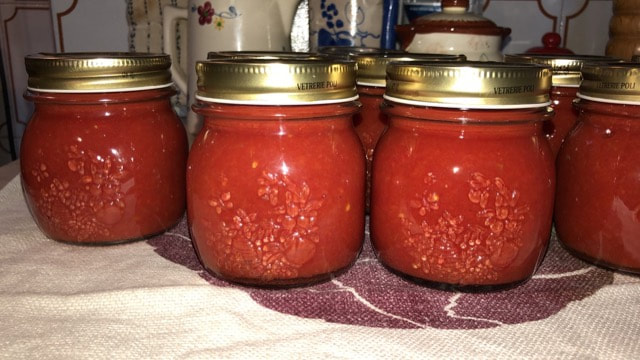 In September Erica was back home, and making passata! You can read all about it in the blog post here, or by clicking the photo above. 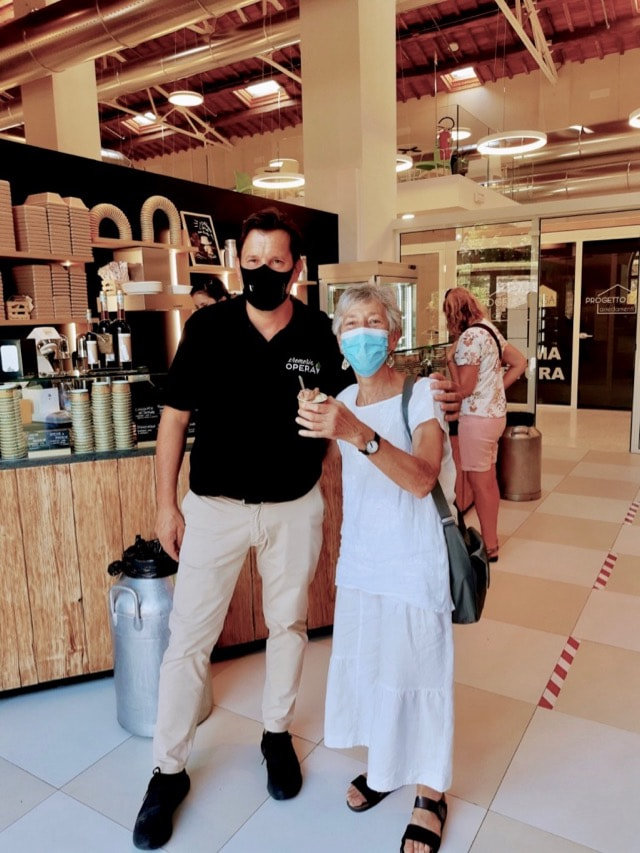 Erica and Mirko in the new Cremeria Opera There was also some excitement for Mirko, who teaches the Art & Science of Gelato course as he opened a new Cremeria Opera just outside the walls of Lucca. Erica and Mirko had a little celebration...wearing masks of course! October 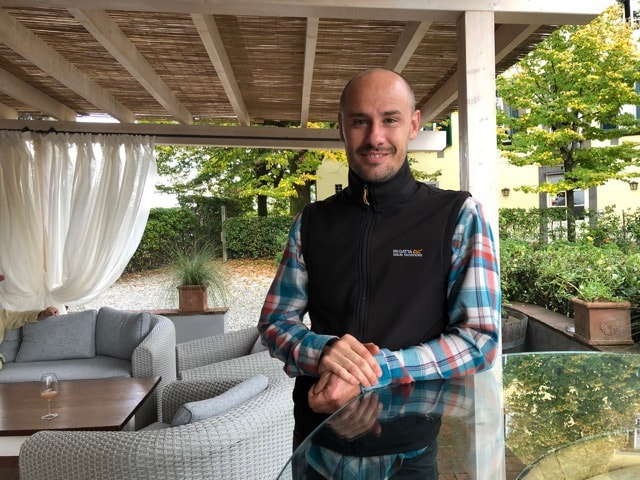 Damiano Donati In October Erica attended a fantastic lunch cooked by her favourite Lucca chef Damiano Donati. She said: 'His restaurant in the centre closed during lockdown. I was forlorn. Now he's popped up at Fattoria Sardi vineyard better than ever. He calls his fixed menu for Sunday lunch Fuoco e Materia (Fire and Matter). He was always fascinated by contrasting textures. Now he has a wood-fired oven in his kitchen and is playing with smokey flavours too, and it works. Here he is relaxing on the terrace after lunch. The dishes included: squash cooked two different ways and wrapped in chestnut leaf parcels, beetroot risotto, chicken stuffed with pork accompanied by smokey crushed potatoes. If you opt for the wine tasting, you get a different delicious biodynamic wine paired with each course.' 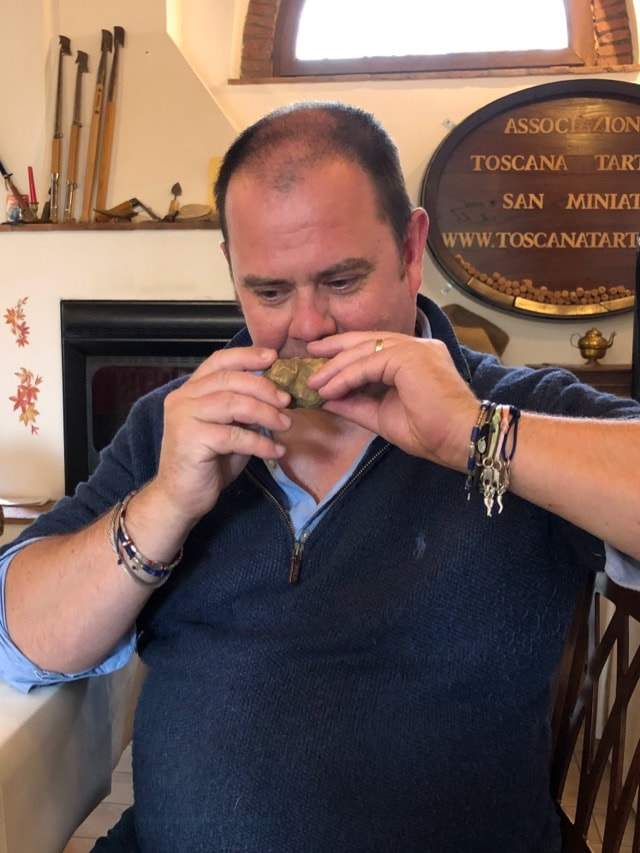 Brendan assesses a truffle There was also a little time to squeeze in some truffle hunting for a private tour! Truffle hunter Riccardo instructed Brendan in how to use three of his senses—sight, smell and touch—to assess whether the truffle is poor, mediocre or excellent. This 66 gram truffle is excellent, and after his truffle lunch with his wife and child, he decided to buy it so they could go on indulging in truffles for the rest of their holiday. 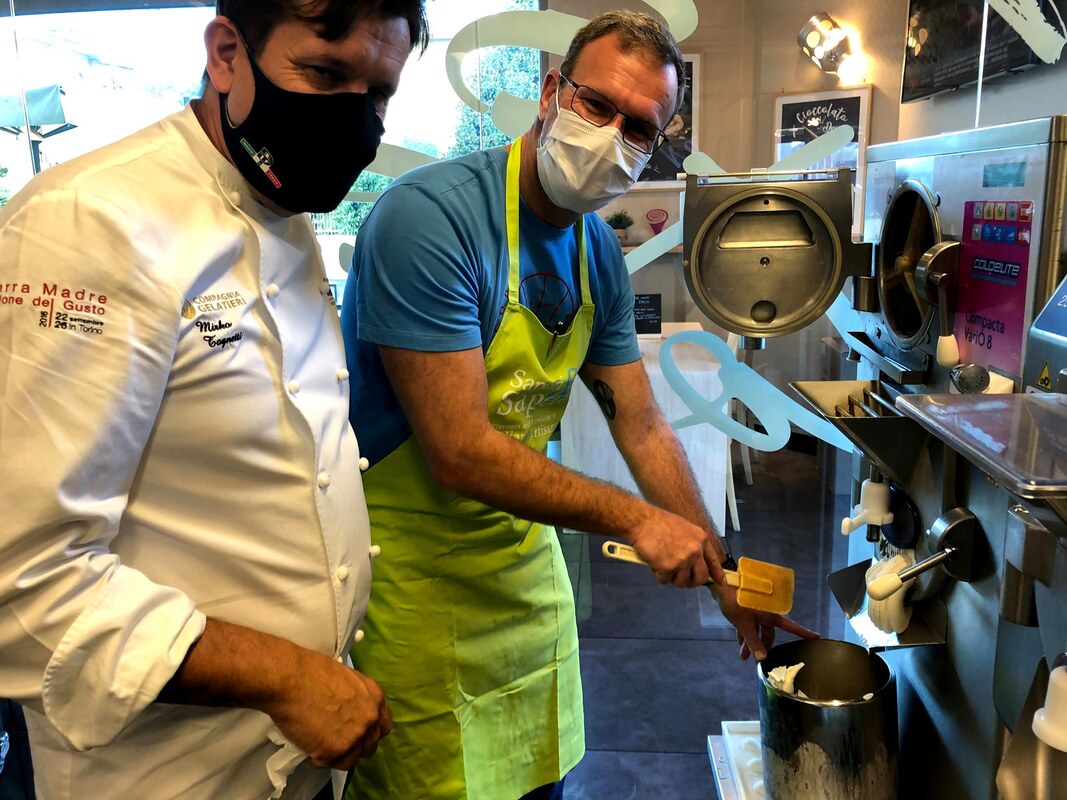 We were also delighted to be able to hold a REAL LIFE Art & Science of Gelato course in October! We welcomed Niels, chef on a super-yacht. On the October course we teach how to make sourdough panettone as well as gelato so you know how to do it in time for Christmas. For his unique flavours Neils created pineapple and rosemary sorbetto, date and whisky gelato and Piña Colada sorbetto! November 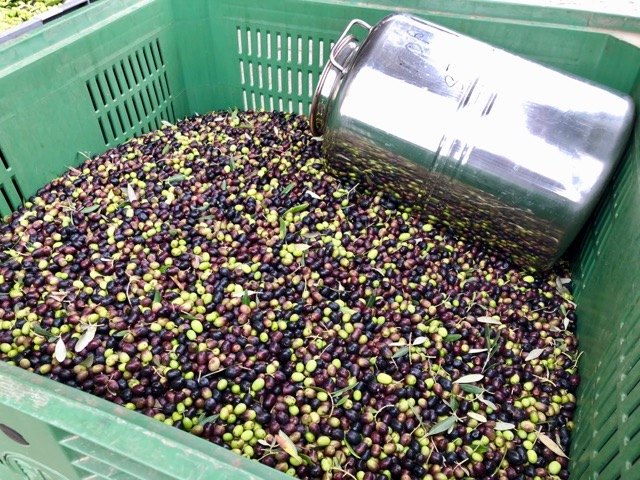 Olives ready for processing 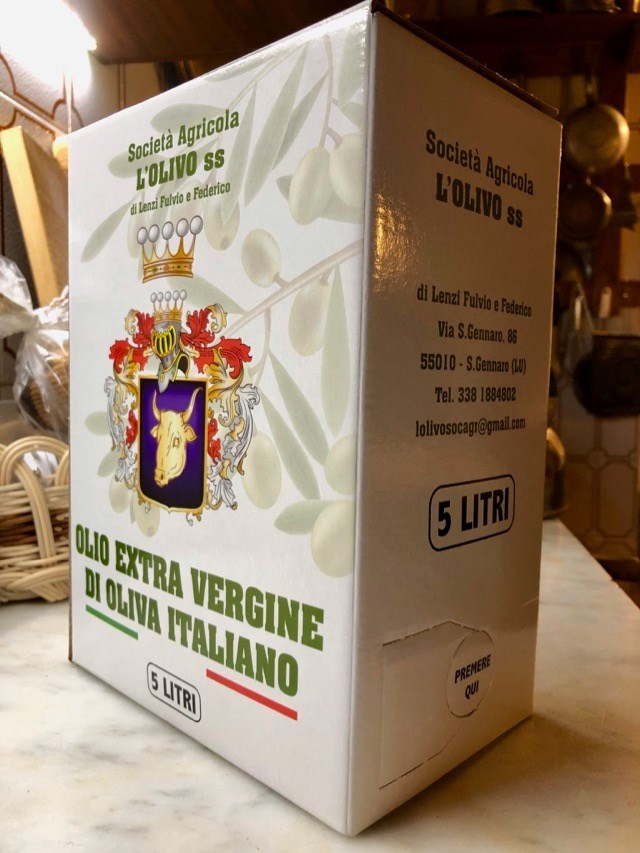 The finished product! In November Erica went to Frantoio Lenzi to get her year's supply of olive oil. At the height of the harvest, frantoi (olive mills) are open 24/7 and it's always chaotic. She picked up bag-in-box new oil. You can recycle the box, but not the bag. However, by excluding air it keeps the oil from oxidising so rapidly and preserves the health benefits and the flavour for longer. The oil is fruity (tastes like olives!), medium picante and medium bitter. Her conclusion: a nice rounded flavour. 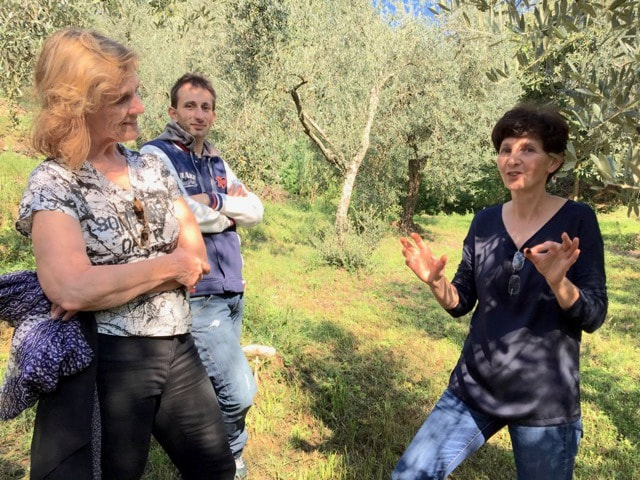 Elisabetta Sebastio (right) 2020 would have brought us the first participants on our new Olive Oil: Tree to Table in Tuscany course, but it was not to be. Nevertheless, we ran a virtual tour to whet your appetite! Read all about it in the blog post here. December 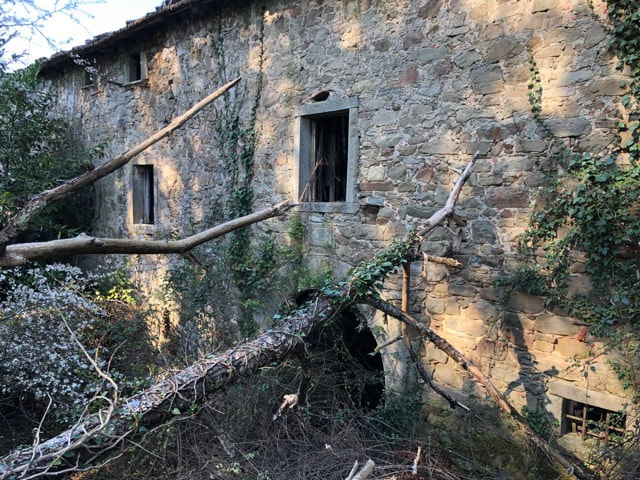 One of the most popular blog posts of the year was about the abandoned farm houses of Casabasciana. Wonderful photos and stories, can be seen in the blog post here. The year wound down with a poignant blog post featuring a video about the death of peasant farming. It was made by farmers in Umbria, but it could have been made anywhere in Italy—or in many other countries in fact. We visit many small farmers during tours and one of the things that was important when setting up Sapori e Saperi Adventures was to help preserve this way of life. You can watch it in our blog post here. 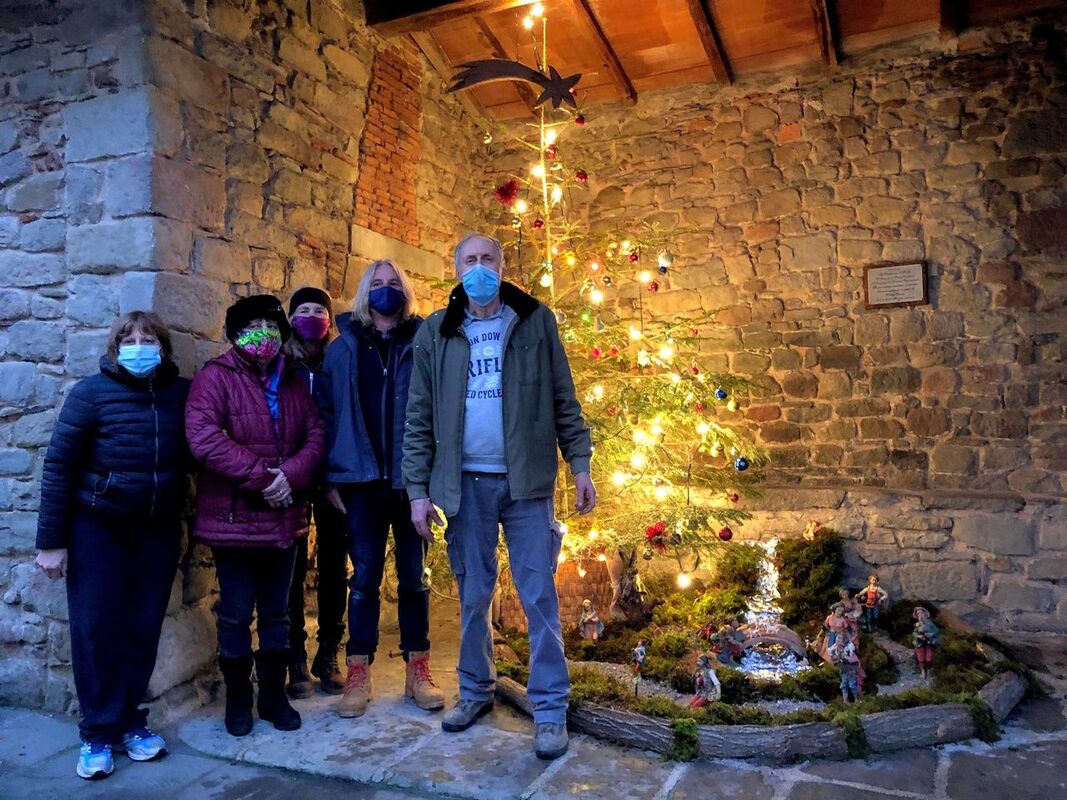 After such a trying year it was nice for Erica to join her local community to decorate the village Christmas tree, a long-standing tradition which was just a little different this year.
We hope you have had a healthy 2020 and wish you all the best for 2021. We'd love nothing more than to welcome you onto one or more of our tours and courses. Get in touch with Erica at [email protected] for more information or for answers to any questions you may have. If you landed here by chance and would like to be notified of future posts, you can sign up here. If you’d like periodic news about our tours and courses, sign up here. This blog post is part 2 of my recent travels around Italy. You can read the first part 'Food & Wine in Napoli & Pompei' here. But for now, let's start with the second half of my tour... I take the train from Pompei to Salerno and change for the regional train heading south. Maria Sarnataro picks me up at the station at Vallo di Lucania. We arrive at her home just in time for dinner. She has a surprise for me, a manteca. 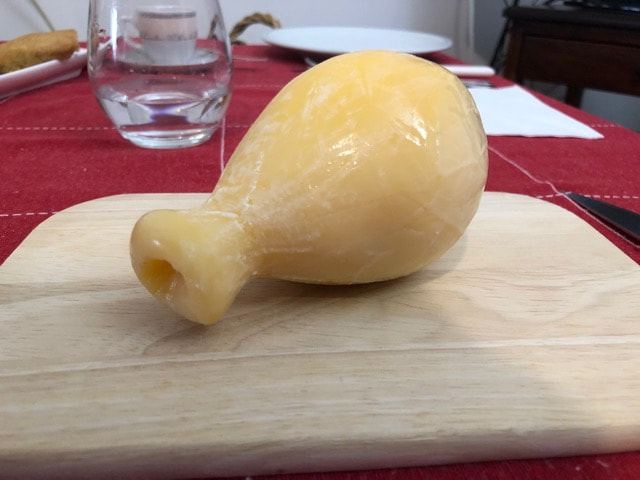 Manteca looks like a small cacciocavallo cheese, but there's a surprise inside. It’s butter encased in caciocavallo cheese and it has a story. The people of Basilicata who take their Podolica breed of cattle to alpine pastures for the summer make caciocavallo which they mature until they descend to the valleys in autumn where they sell it. They make ricotta from the whey, but there’s too much for them to consume fresh. It can’t be kept for more than a few days and there's nowhere to sell it. So, by an ingenious and complex process of draining, heating and cooling, they extract the butterfat from the ricotta. 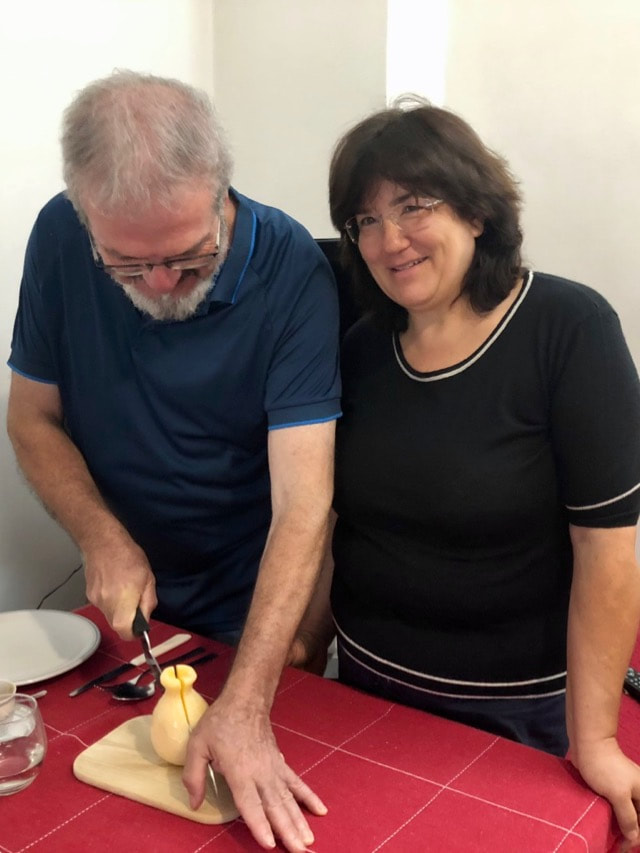 The suspenseful cutting of the manteca To conserve the butter without refrigeration they encase it in a thin layer of caciocavallo curd. Piero, Maria’s husband, is an agronomist. Part payment for his consultancy with these people was this manteca. 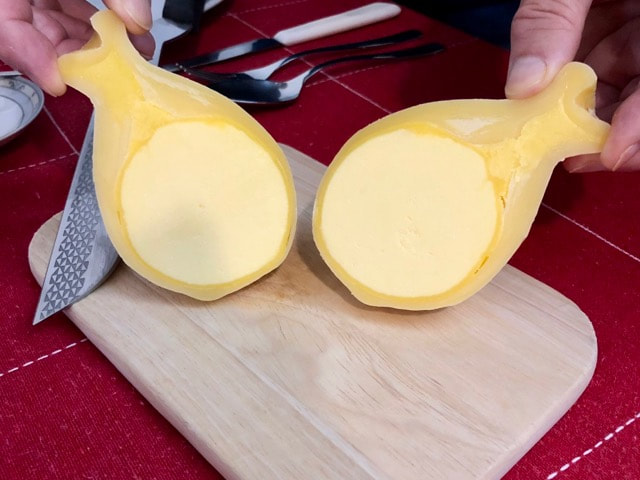 The butter is delicious and, surprisingly, doesn’t taste cheesy. 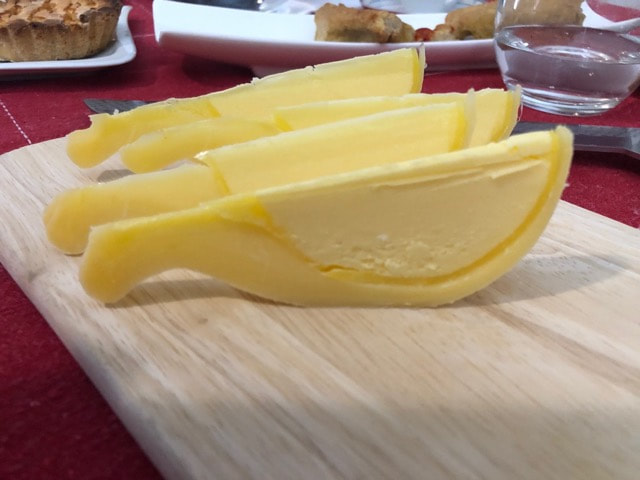 You're supposed to cut it in rounds, but we thought it looked better in wedges. There are so many mozzarella dairies in Salerno Province that you could spend several weeks visiting all of them. There are two that I’ve heard excellent reports of and haven’t managed to visit: Barlotti and Vannulo. Vannulo is organic, only sells from their own shop at the dairy and often comes at the top on lists of the 10 best mozzarellas. Maria has booked lunch there. On the way we stop at Barlotti where she introduces me to brothers Enzo and Gaetano Barlotti. 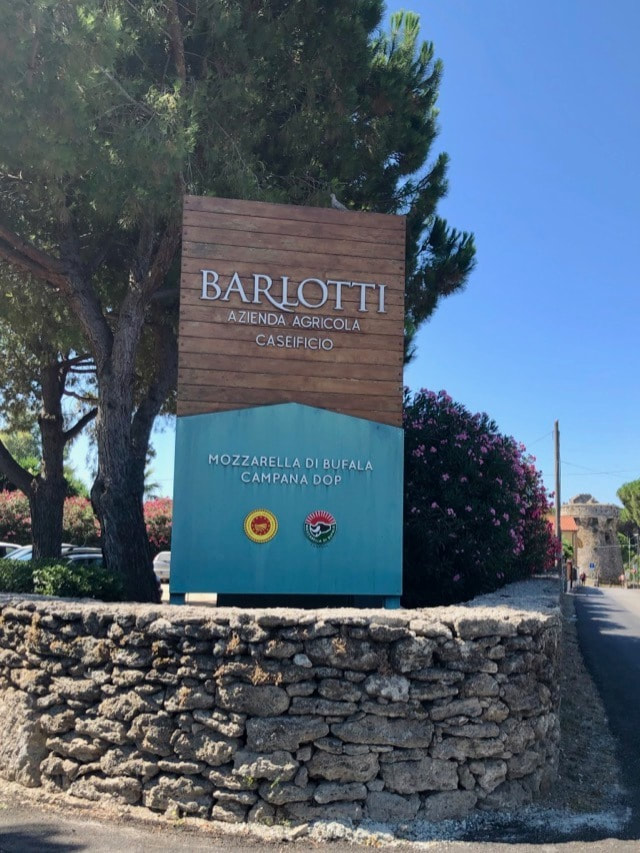 We eagerly accept Enzo’s invitation to bring the participants on our mozzarella courses for a tasting. You taste so much bad mozzarella everywhere else that we need to educate our palates while here. 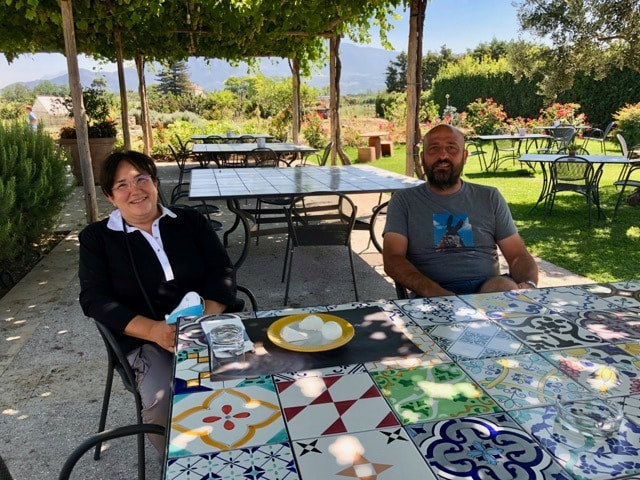 Maria & Enzo in the beautiful tasting garden He presents us with samples of his bocconcini, ricotta and a new brie-style cheese, all made with the milk of their own buffalo herd. The mozzarella and ricotta are among the best I’ve tasted. The ‘brie’ is a little bitter and needs some work, but it’s exciting that they’re experimenting with new cheeses. 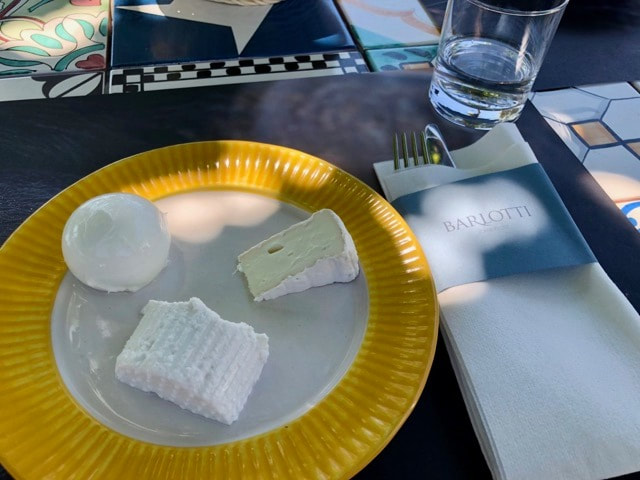 Bocconcino means a morsel and is the name given to a small ball of mozzarella weighing about 50 grams. 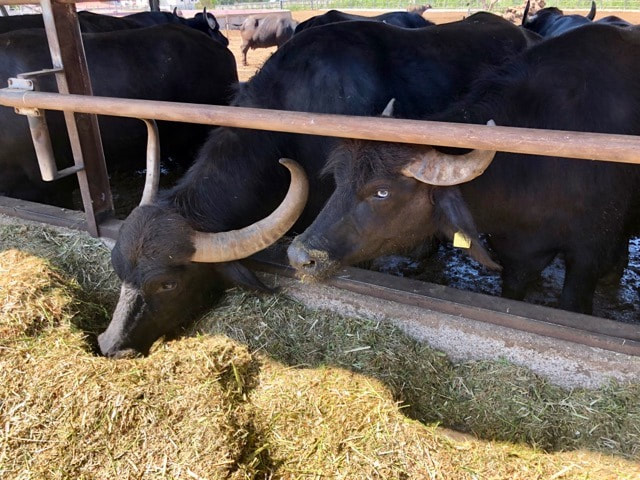 The Barlotti girls on whose milk the quality of their cheese depends Many of the mozzarella dairies offer tastings in beautiful settings and some have a dining room where you can sit down to a multi-course lunch. Vannulo has perfected the tourist experience, which as you probably know by now, puts me right off. Maria is a friend of the owners, but they don’t welcome us when we arrive, and are nowhere to be seen. Maria tells me that it used to be different, but now it’s all hired staff, who display not an ounce (not even a gram) of passion for their products. Our vegetable salad from their organic garden is good, the mozzarella not outstanding. They’ve installed a leather workshop which sells their own handbags, etc, but they take no interest in us visitors. The museum of agricultural implements is marginally interesting, but I’ve been to better ones. If you come on the mozzarella course, you won’t be visiting Vannulo on our tasting afternoon. 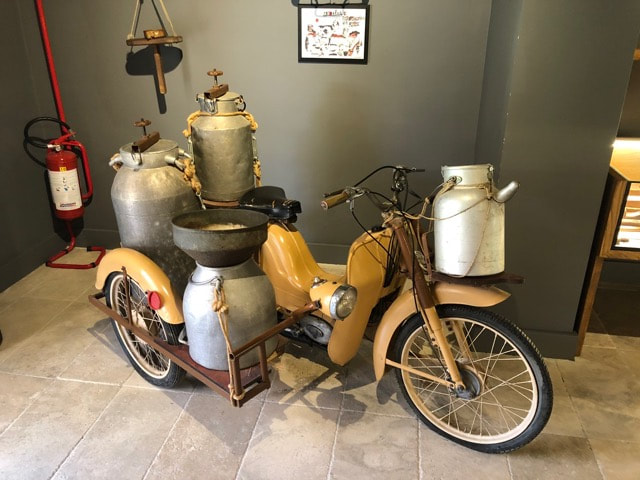 At least this milk delivery bike makes me laugh. Francesca Fiasco’s vineyard at Felitto couldn’t be further from a tourist experience. The only sign on the road is Francesca herself waiting to show Maria and me her vineyards and cantina (cellar). She exudes passion and authenticity and does virtually all the work herself right down to designing the labels. 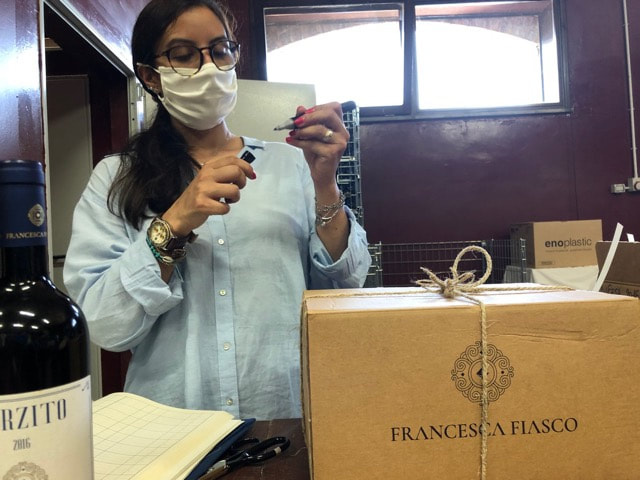 She cultivates autochthonous varieties such as fiano, aglianico and piedirosso (the one I saw at Pompei) as well as varieties such as sangiovese and merlot, which arrived in the area so long ago that they are included in the DOC. 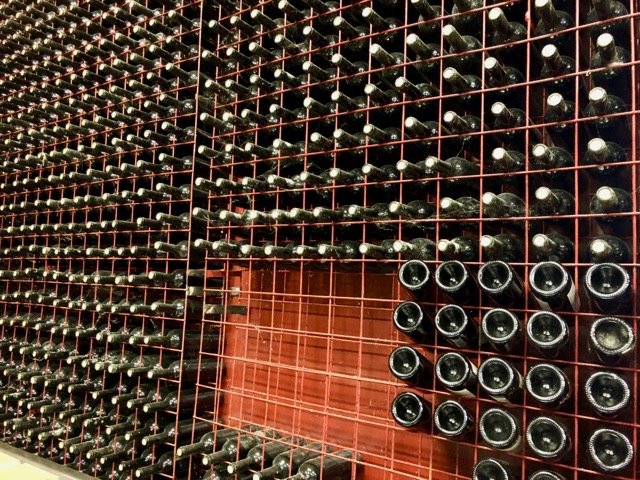 Here's an idea for a wine rack: two layers of metal fencing. She produced her first wine in 2016 and is already being recognised by wine critics. She gave me a case of wine with a handwritten label. Sadly, I couldn’t carry it back to Lucca on the train. I know Maria will make good use of it. She not only teaches cheese courses, but also sommelier courses. 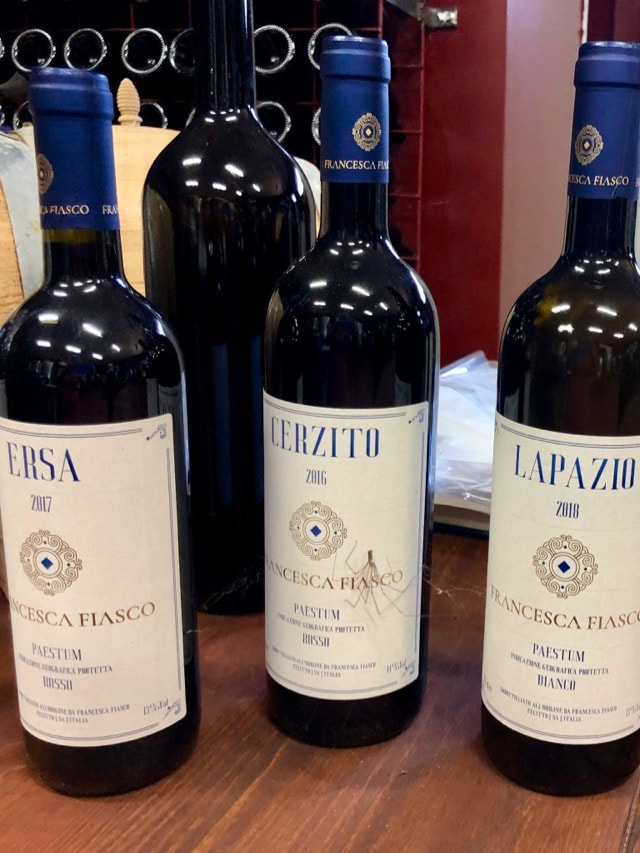 Just so you know my trip isn’t all hard work eating and drinking, this morning Maria takes me to her favourite secluded beach, fairly free of tourists (especially in these times of Covid-19). 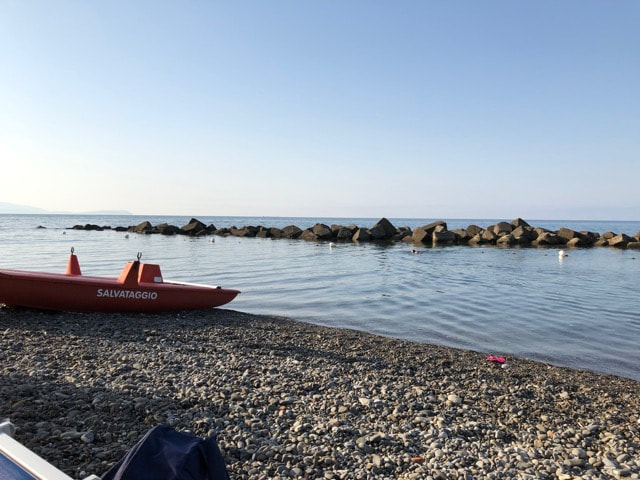 If you can see a head bobbing about here, it’s Maria. 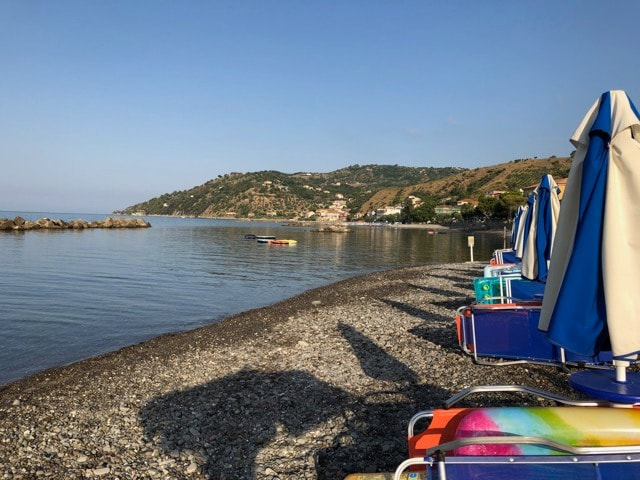 I’m reclining on a beach chair. What a beautiful place to do absolutely nothing. 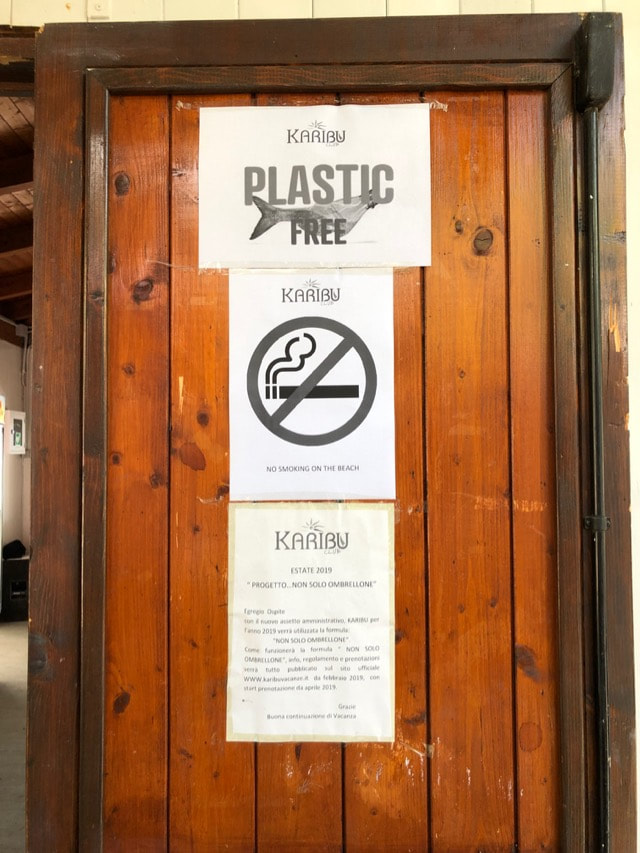 The sign on the door of the beach club You have to go a long way to find gelato as good as Mirko Tognetti's of the Cremeria Opera at Lucca. Here I am at Sapri in southern Campania enjoying Enzo Crivella’s latest creation which he’s describing animatedly. 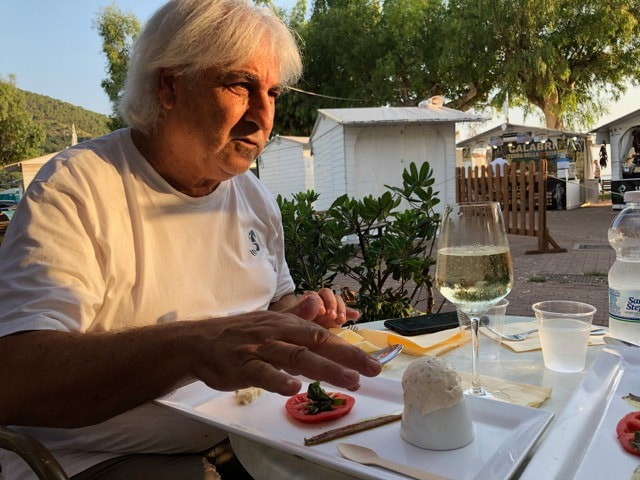 An aperitivo of bread gelato with an anchovy, a slice of tomato with basil and a buffalo milk blue cheese They sound an unlikely combination, but it works. Try it! You have to make a perfectly balanced bread gelato. Maybe best to come on Mirko’s and my gelato course first! 😃
That marks the end of my tour. I'd love to welcome you onto one of our tours or courses soon. Take a look at our website to find out dates and details and get in touch with me to book your spot. I look forward to seeing you! By Alison Goldberger Every month there’s something happening at Sapori & Saperi – lots of interesting people visit and we take lots of photos of our tours and courses. We thought it was about time we shared some with you on a regular basis. Here’s our January round up, giving you an extra insight into the tours and courses with Italian artisans you could attend with us, as well as some snippets of life in Italy! 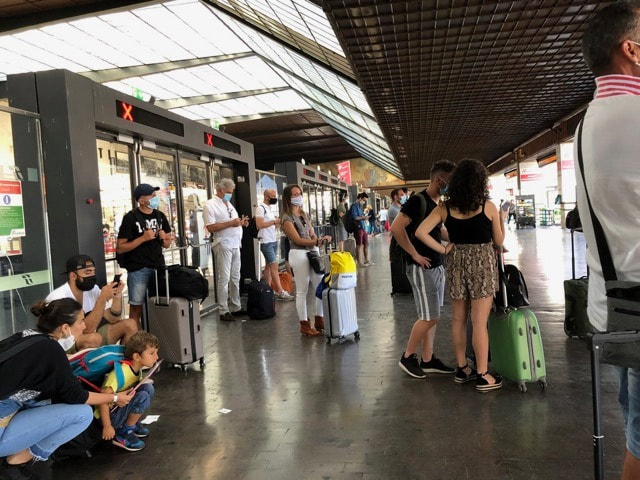 Cotechino and lentils — a delicious New Year's Eve meal As the new year rang in Erica feasted on a New Year’s Eve meal, typical for the region she lives in. She ate cotechino with lentils. As they’re round, they symbolise money and will make you rich. We’re still waiting! Maybe next year. The good news is that you can learn how to make cotechino during the Advanced Salumi Course Tuscany!  Mirko and Gin During the first course of the year we welcomed the talented Sorravee ‘Gin’ Pratanavanich — find her on instagram. As a qualified pastry chef from the Culinary Arts Academy in Switzerland, she wanted to learn how to make delicious natural gelato — so naturally Sapori & Saperi and our artisan Mirko were there to help her. 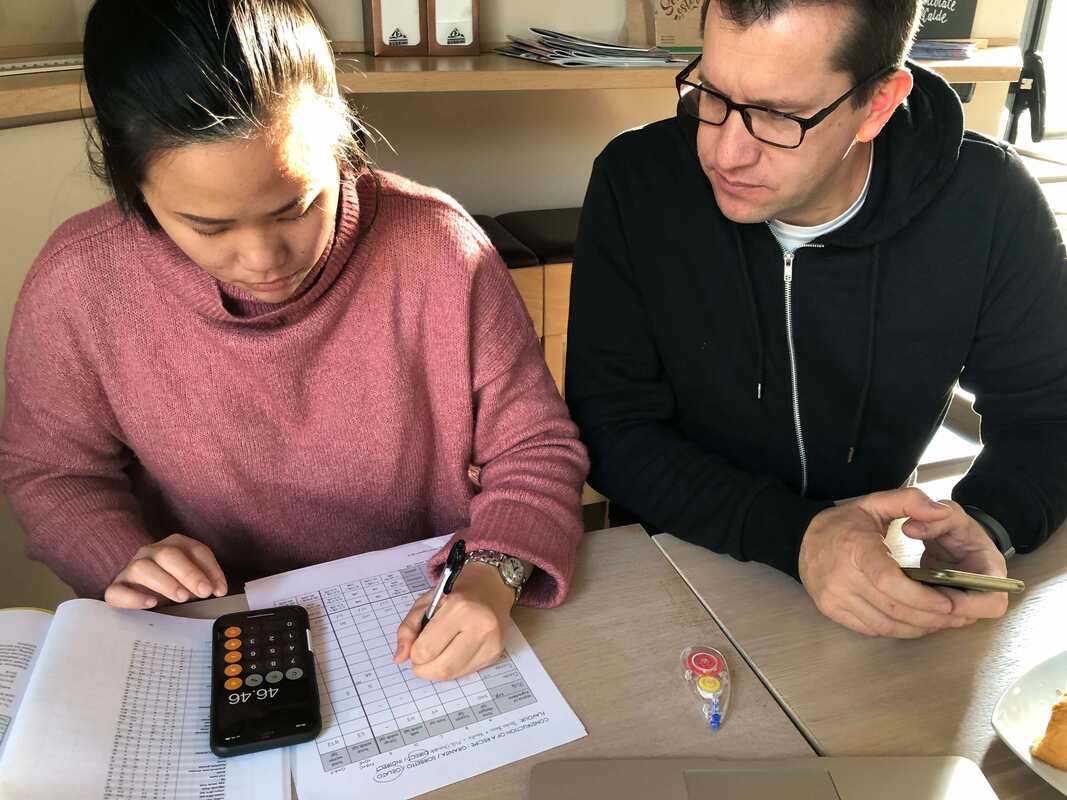 Fat + sugar = gelato? Gin learned the true science of gelato too – and that’s not easy! How to balance the fat, sugar, milk solids and water to make sure the product not only tastes incredible but has the perfect texture too. 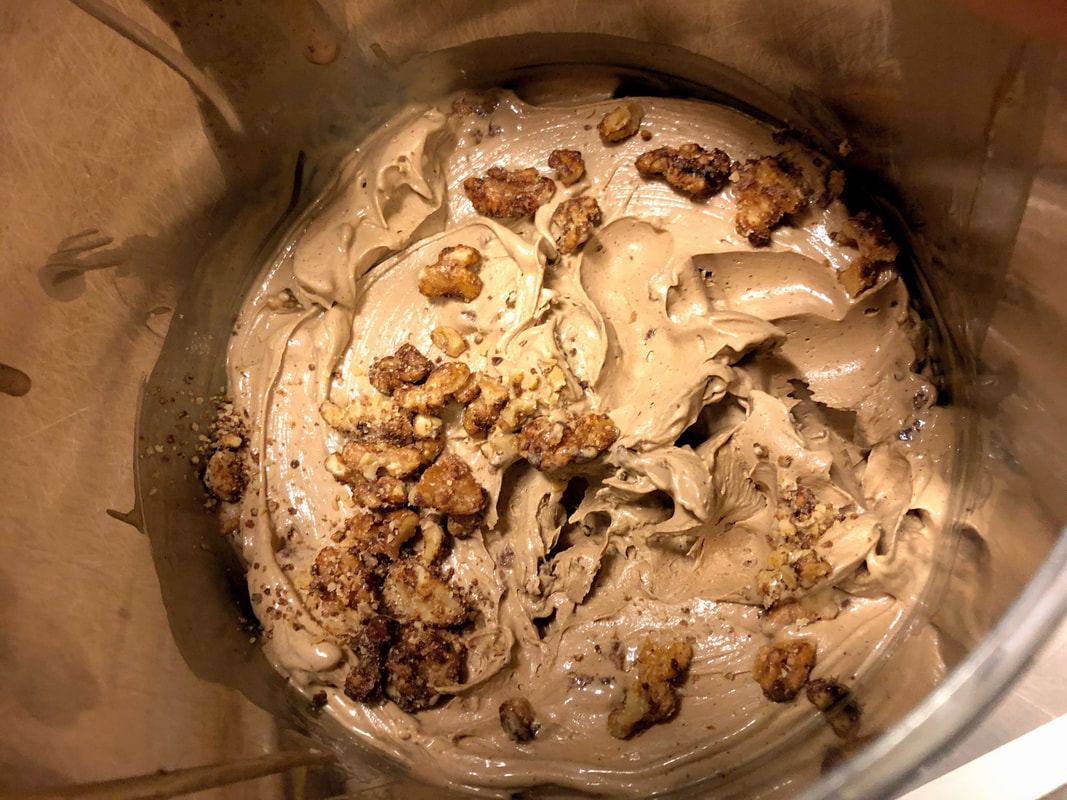 'Coffee B' flavoured gelato Friday on the Art & Science of Gelato course is always ‘crazy flavours day’, and Gin really went for it with her recipes. She created the incredible ‘Coffee B’ gelato made from coffee, caramelised walnuts and Baileys! She also took some inspiration from the Thai street food ‘garlic and pepper chicken’ and used soya, black pepper and crispy garlic in her gelato. A brave experiment. She learned it’s valuable to let your imagination run wild — whether you create something delicious, or you learn what doesn’t quite work! 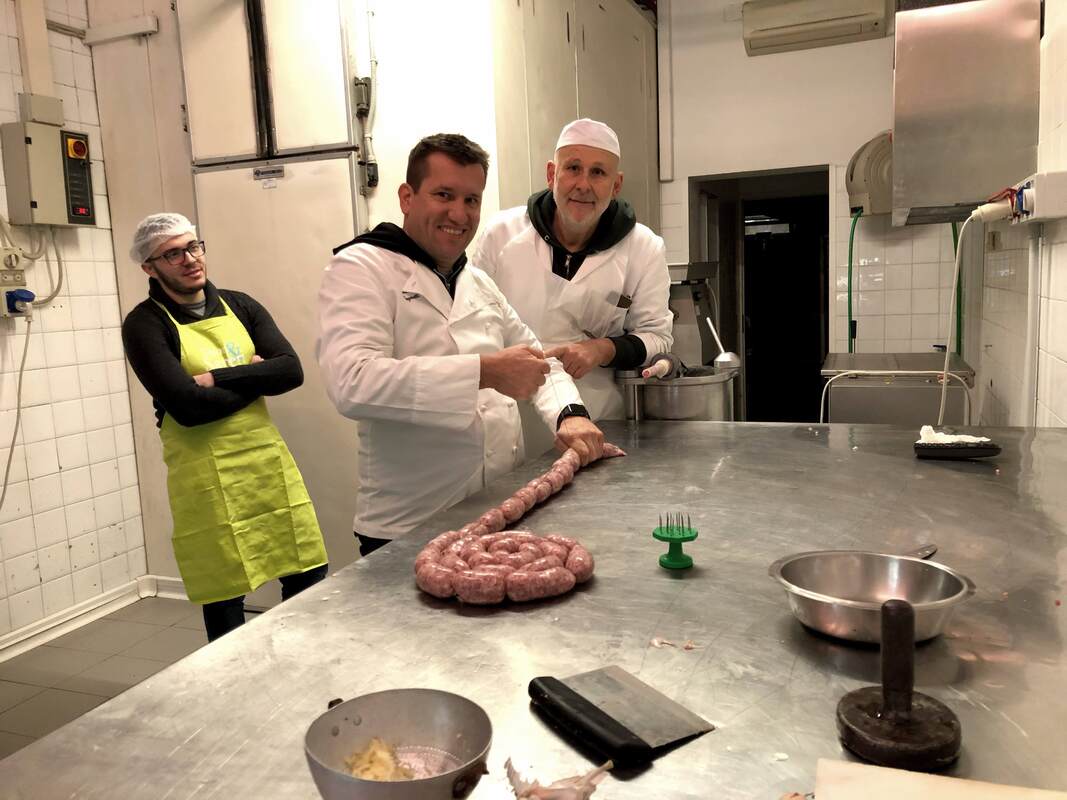 Massimo teaches Mirko how to tie salsicce correctly We had an unusual first day on the Advanced Salumi Course Tuscany as Mirko joined in to learn how to make salami and sausage with our artisan norcino Massimo Bacci. Will Massimo learn how to make gelato next?  Our group learns from Ismaele Turri We had a great group taking part in the course – here you can see them intensely watching artisan norcino Ismaele Turri as he prepares Tuscan prosciutto. Check out our student, former chef to the Ambassador at the British Embassy Prague and now head of charcuterie at Amaso, Vojtech Kalasek, who posted lots of great images on instagram throughout the whole course. 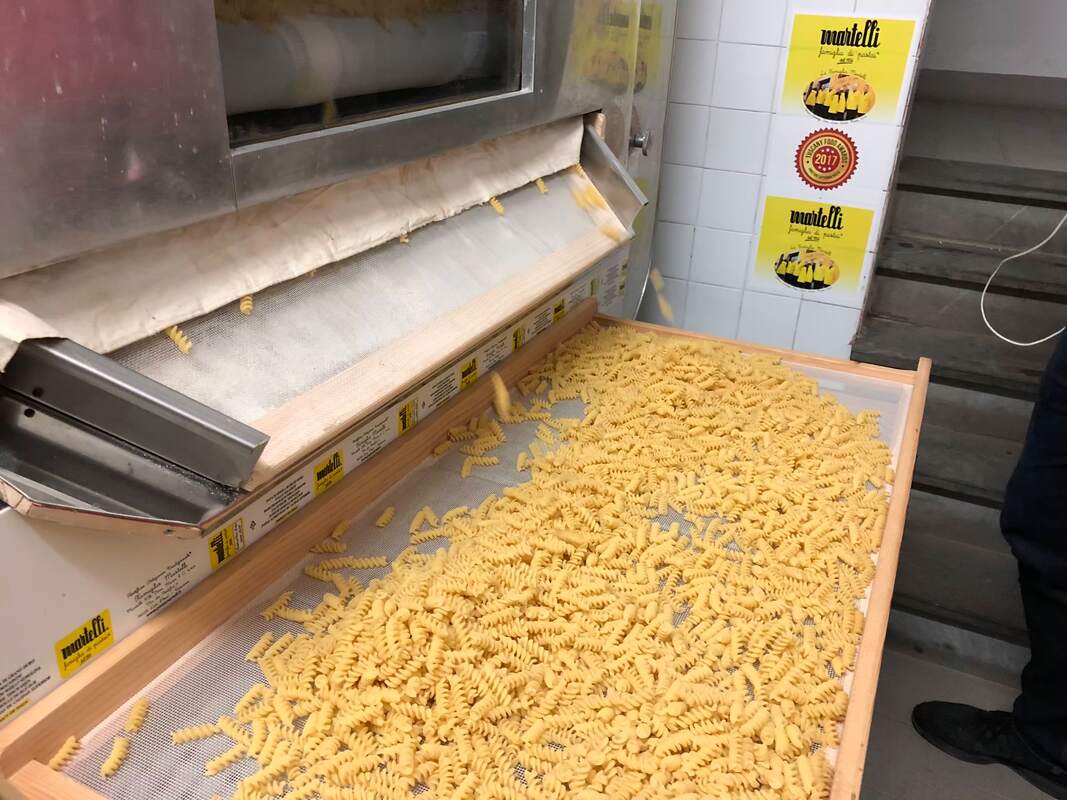 During our tours and courses we like to slip in some surprise extra visits. This time we visited Pastificio Martelli which makes pasta in the Renaissance hilltop town of Lari, where our prosciutto specialist Simone Ceccotti has his butcher shop. We left wondering how many machines you can use and still be artisan. We decided that one important thing is that it's natural: only Italian durum wheat and water and dried very slowly for 50 hours. And just as important, that it tastes good and the slightly rough surface holds the sauce.
January also brought us a wonderful guest blog post from Lin Hobley, a weaver-artist and past participant on the Tastes & Textiles Woad & Wool tour. We published a review of the year, and Erica gave a run down of our different hotels and accommodation on Slow Travel Tours. If you’d like to join us, check out our website. Can’t wait to see you! |
Email Subscription
Click to subscribe to this blog and receive notifications of new posts by email. AuthorErica Jarman Categories
All
Archives
October 2023
|
 RSS Feed

We acccept
|

Read about us
|

|

|
|
copyright 2017 sapori-e-saperi.com | all rights reserved
|
Website by Reata Strickland Design